
A healthy home garden doesn’t need to take over your weekends. But without regular garden maintenance, weeds can spread quickly, soil can dry out, pests may go unnoticed, and dead growth can leave garden beds looking tired. A few simple tasks done regularly can make garden care much easier and keep plants growing well through the season. The trick is not doing everything at once. Small jobs, done at the right time, usually work better than waiting until the garden needs a major cleanup. Your local weather matters, too. A garden in a hot, dry part of the U.S. may need a different routine than one in a cooler, wetter area. With a practical garden upkeep routine, you can keep your home garden healthy without spending every weekend working outside.
TL;DR: What Does Garden Maintenance Include?
Garden maintenance includes regular watering, weeding, pruning, deadheading spent flowers, mulching, soil care, and feeding plants when needed. It also includes checking for pests and plant diseases, removing damaged growth, and cleaning garden beds during seasonal changes. The goal is simple: give plants the care they need while keeping the garden clean, healthy, and manageable throughout the growing season.
What Is Garden Maintenance?
Garden maintenance is the regular care that keeps a garden healthy, tidy, and productive through the growing season. It includes simple jobs such as watering plants, removing weeds, caring for soil, pruning damaged growth, checking for pests and diseases, and cleaning garden beds. Good garden upkeep also supports plant health by giving roots the moisture, nutrients, space, and growing conditions they need. Garden maintenance and gardening are closely related, but they are not quite the same. Gardening often focuses on planting and growing plants, while maintenance is the ongoing care that keeps those plants in good shape after they are established. Your routine may change with plant growth, weather, and seasonal care needs.
10 Essential Garden Maintenance Tasks
A good garden maintenance routine is built around small jobs that prevent bigger problems later. You don’t need to spend hours outside every day. Focus on the basics, pay attention to your plants, and adjust your routine as the weather changes.
1. Check Soil Moisture Before Watering
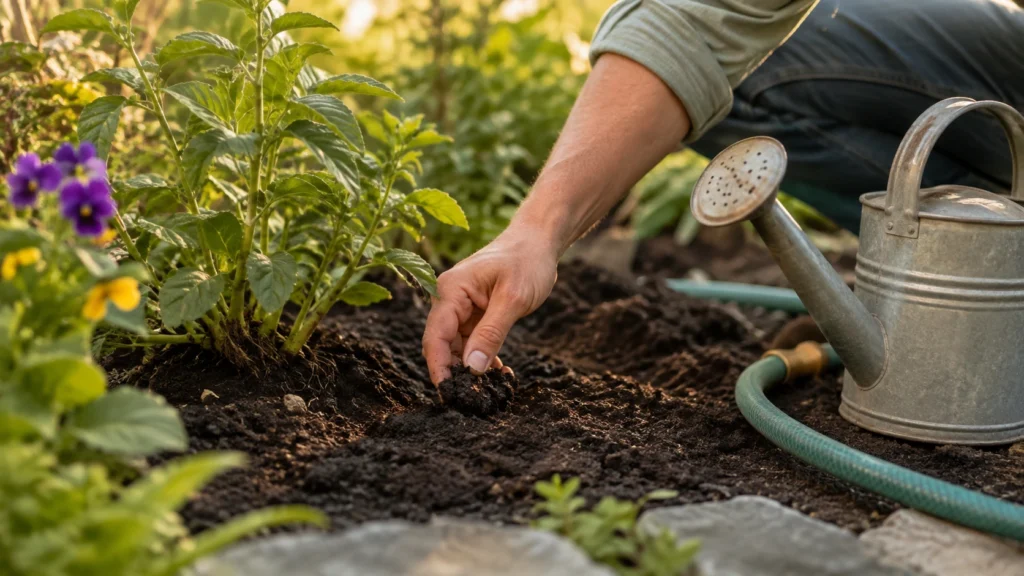
Don’t water garden plants simply because it’s part of your routine. Push a finger into the top inch or two of soil and check how it feels. If the soil is still damp, wait. When watering is needed, deep watering is usually more useful than a quick splash because moisture can reach the root zone. During hot, dry weather, check soil moisture more often.
2. Remove Weeds Before They Spread
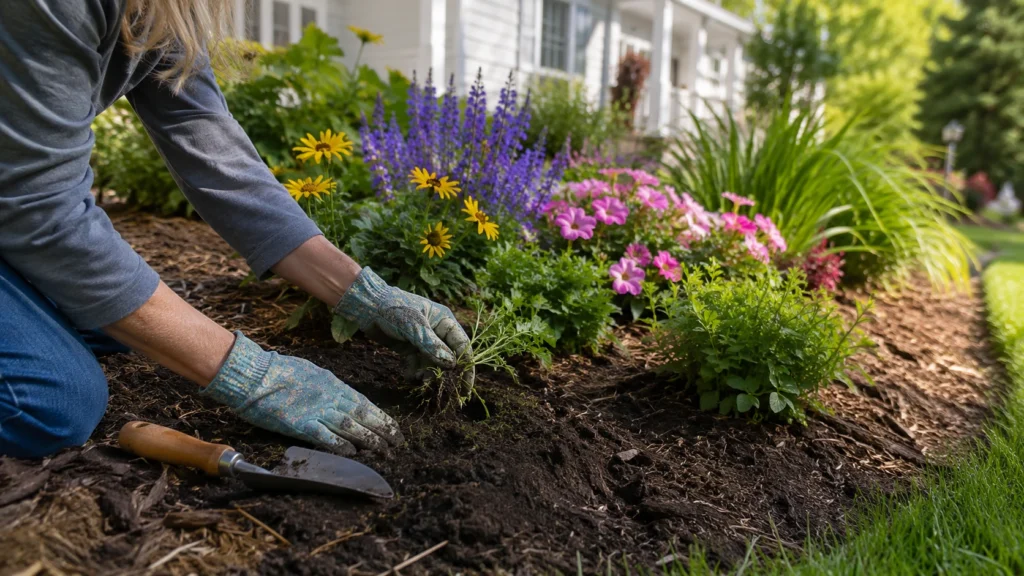
Pull garden weeds while they’re still small. Young weeds are easier to remove and are less likely to compete with your plants for water, sunlight, and nutrients. Try to remove the roots when possible, especially with persistent weeds. A layer of garden mulch can also help block sunlight and reduce new weed growth.
3. Prune Plants at the Right Time
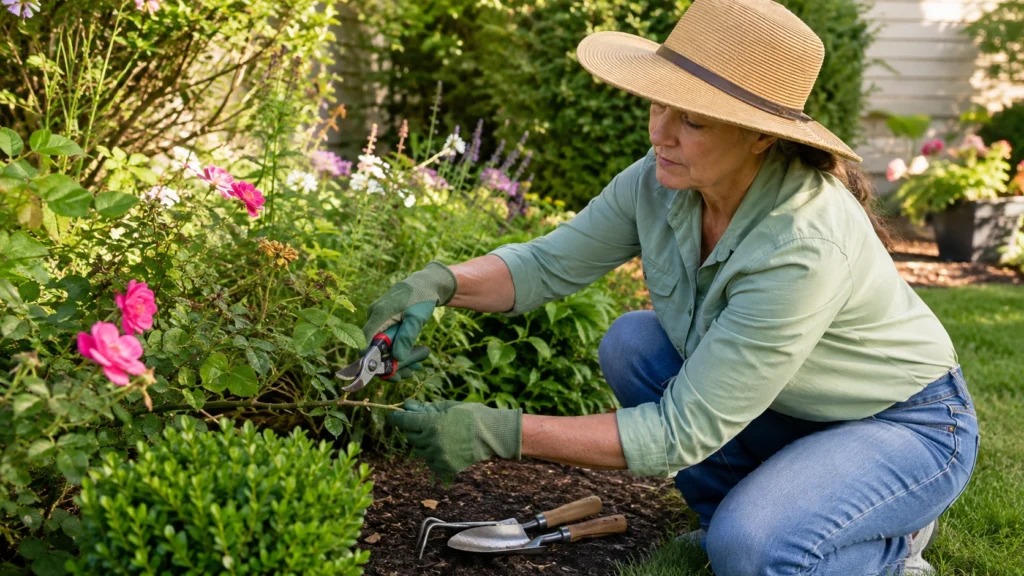
Garden pruning isn’t simply about cutting a plant back whenever it looks untidy. Remove dead, broken, or diseased growth, but check the needs of the specific plant before making larger cuts. Some shrubs and flowering plants should be pruned after blooming, while others need attention at a different time. Good pruning supports plant maintenance without removing healthy growth unnecessarily.
4. Deadhead Spent Flowers
Deadheading means removing faded blooms before they become old, messy-looking flowers. For many flowering plants, this can encourage more blooms and keep the garden looking fresh. Use clean scissors or pruning shears and cut just above a healthy set of leaves when appropriate. But don’t automatically remove every spent flower—some plants produce useful seeds or provide food for birds.
5. Maintain a Healthy Mulch Layer
Mulching helps garden beds hold moisture, limits weed growth, and moderates soil temperatures. Keep a fairly even layer around plants, but don’t pile mulch directly against stems or tree trunks. Too much moisture around the base can create problems. Organic materials such as shredded bark, leaves, or composted material can work well depending on the garden.
6. Feed Plants When They Need It
Not every plant needs fertilizer on the same schedule. Before adding garden fertilizer, consider the plant’s needs, soil condition, and time of year. A soil test can show whether nutrients are actually lacking. Too much fertilizer can damage roots and lead to weak, excessive growth, so follow the product directions rather than assuming more will produce better results.
7. Improve Soil With Organic Matter
Healthy garden soil gives roots a better place to grow. Adding finished compost or other suitable organic matter can improve soil structure, moisture handling, drainage, and nutrient availability. Avoid treating every soil problem with fertilizer. Sometimes the bigger issue is compacted or poorly draining soil. Check the condition of your garden beds before deciding what they need.
8. Check for Pests and Diseases
Make pest inspection part of your normal garden care. Look at leaves, stems, and new growth for holes, discoloration, spots, insects, or unusual wilting. Finding a problem early can make garden pest control much easier. Don’t automatically reach for a spray, though. First identify what you’re dealing with and decide whether treatment is actually needed.
9. Remove Dead Leaves and Garden Debris
Clear fallen leaves, dead branches, damaged stems, and other unwanted garden debris from your beds. Diseased plant material deserves extra care and shouldn’t simply be left around healthy plants. Regular garden cleanup also makes it easier to spot weeds, pests, and new plant growth. During fall and spring, you may need a little more time for seasonal cleanup.
10. Keep Garden Tools and Irrigation in Good Shape
Clean pruning shears after working with plants, especially if you’ve removed diseased growth. Sharp tools make cleaner cuts, while dirty or damaged tools can spread problems. Check garden hoses, sprinklers, and drip lines for leaks or blocked areas, too. A reliable watering system saves time and helps deliver water where your plants actually need it.
How Often Should You Maintain a Garden?
There isn’t one fixed schedule for every garden. Your plants, soil, rainfall, temperature, and growing season all affect how often garden maintenance is needed. A quick check several times a week can prevent small issues from turning into bigger jobs, while some tasks only need attention once a month or during a particular season. This simple garden maintenance schedule gives you a starting point:
| Garden Maintenance Task | How Often | Why It Matters |
| Check soil moisture | Several times a week/as needed | Prevents water stress |
| Weeding | Weekly | Stops weeds spreading |
| Pest inspection | Weekly | Catches problems early |
| Deadheading | As needed | Keeps flowering plants tidy |
| Mulch check | Monthly | Maintains moisture and weed control |
| Fertilizing | Plant-dependent | Supports healthy growth |
| Pruning | Season/plant dependent | Maintains plant health and shape |
| Garden cleanup | Monthly/seasonally | Reduces debris |
A weekly garden maintenance routine can handle most small jobs, while monthly garden maintenance gives you time to check mulch, tools, soil, and irrigation. Use the schedule as a guide rather than a strict rule, especially when weather changes quickly.
Seasonal Garden Maintenance for U.S. Home Gardens
Garden maintenance changes with the seasons, and there isn’t a single calendar that works across the entire U.S. A garden in Florida may still be growing while one in Minnesota is preparing for its first frost. Your USDA hardiness zone, local climate, plant types, and weather should guide the timing of seasonal care.
Spring Garden Maintenance
Start by clearing winter debris, checking garden beds, and preparing the soil for new growth. Inspect plants as they emerge and replace anything that didn’t survive the winter. Add fresh mulch where needed, and choose plants that fit your growing conditions.
Summer Garden Maintenance
Summer usually means more attention to soil moisture. Check plants during hot or dry periods, water deeply when needed, and stay on top of garden weeds. Watch for heat stress, wilting, and pest activity, especially during extended drought conditions.
Fall Garden Maintenance
Remove fallen leaves and diseased plant material, clean up garden beds, and prepare suitable plants for colder weather. Adjust watering as temperatures drop, but don’t assume every plant needs the same treatment.
Winter Garden Maintenance
Protect sensitive plants where needed, clean and store garden tools, and check plants for winter damage. Winter is also a good time to plan spring planting and review what worked well during the previous growing season.
The exact timing can vary by USDA hardiness zone and local weather. Native plants and established perennials may also have different care needs, so use seasonal guidelines as a starting point rather than a strict calendar.
How Much Does Garden Maintenance Cost?
Garden maintenance costs depend on the size of the garden, the condition of the property, your location, and how much work you want done. Current U.S. pricing data puts routine maintenance at about $70–$300 per visit, with $120 listed as a median price. Basic cleanup can cost less, while an overgrown garden or larger seasonal cleanup can push the price higher. DIY garden maintenance can reduce labor costs, especially if you only need occasional help. Professional maintenance services may make more sense for larger properties or jobs that require pruning, hauling, or major cleanup.
| Type of Maintenance | Typical U.S. Cost* |
| Basic garden cleanup | $50–$150 |
| Routine maintenance visit | $70–$300 |
| Seasonal cleanup | $100–$400+ |
| Ongoing monthly service | $150–$600+ |
Costs vary by location, garden size, labor, and services included. Cleanup prices can vary widely depending on the amount of debris and the size of the property.
5 Common Garden Maintenance Mistakes to Avoid
Even a regular garden maintenance routine can go wrong if a few basic details are missed. These common mistakes can lead to plant stress, poor growth, and extra work later.
1. Overwatering
More water isn’t always better. Overwatering can leave soil soggy, reduce air around the roots, and cause plant problems. Check soil moisture before watering and consider rainfall, temperature, and the plant’s needs.
2. Pruning at the Wrong Time
Pruning at the wrong time can remove healthy buds or new growth. Before cutting, check when your particular plant should be pruned and focus on dead, damaged, or unwanted growth.
3. Ignoring Weeds Until They Spread
A few weeds can quickly become a bigger weed control problem. Pull them while they’re young and remove as much of the root as possible. Mulch can also reduce new weed growth.
4. Using Too Much Fertilizer
Extra fertilizer doesn’t automatically mean healthier plants. Too much can create a nutrient imbalance, damage roots, or encourage weak growth. Follow the product label and fertilize based on the plant and soil needs.
5. Ignoring Soil Health
Plants depend on healthy soil for water, nutrients, and root growth. Compacted soil, poor drainage, or low organic matter can hold plants back even when watering and feeding are done correctly. Add suitable organic matter when needed and address drainage problems rather than simply adding more fertilizer.
Simple Garden Maintenance Checklist
A simple garden maintenance checklist can keep small tasks from piling up. You don’t need to check off everything at once. A quick weekly check, followed by a few monthly and seasonal jobs, is usually easier to manage.
Weekly
- Check plants for pests or disease
- Check soil moisture
- Pull young weeds
- Remove spent flowers
- Inspect garden beds
Monthly
- Check the mulch layer
- Inspect hoses and irrigation
- Clean garden tools
- Check plant growth
- Feed plants only when needed
Seasonally
- Clear major garden debris
- Prune or plant according to the plant’s needs
- Prepare plants for summer heat or the first frost
FAQs About Garden Maintenance
What does garden maintenance include?
Garden maintenance includes watering, weeding, pruning, deadheading, mulching, soil care, feeding plants, checking for pests, and seasonal cleanup. The exact routine depends on your plants and local growing conditions.
How often should you maintain a garden?
Check your garden several times a week for moisture, weeds, pests, and plant problems. Tasks such as pruning, fertilizing, and major cleanup can be done less often based on the plant and season.
What is the most important garden maintenance task?
There isn’t one task that suits every garden, but proper watering is a good place to start. Checking soil moisture before watering helps prevent both dry roots and problems caused by too much water.
How do you maintain a garden year-round?
Adjust your routine as the seasons change. Spring focuses on new growth, summer on moisture and heat, fall on cleanup, and winter on plant protection and planning.
How can I make my garden easier to maintain?
Use mulch, choose plants suited to your climate, group plants with similar needs, and deal with weeds and small problems early. A simple weekly routine can prevent larger jobs later.
Is garden maintenance expensive?
It doesn’t have to be. DIY garden maintenance mainly costs your time and supplies, while professional services can range from basic cleanup to recurring visits depending on the size and condition of the garden.
Final Thoughts
Good garden maintenance doesn’t have to mean spending every weekend working outside. A simple routine of watering, weeding, pruning, soil care, pest checks, and seasonal cleanup can keep your home garden healthy and easier to manage. Pay attention to your plants, adjust care as weather changes, and handle small problems early. A little regular garden upkeep can go a long way.