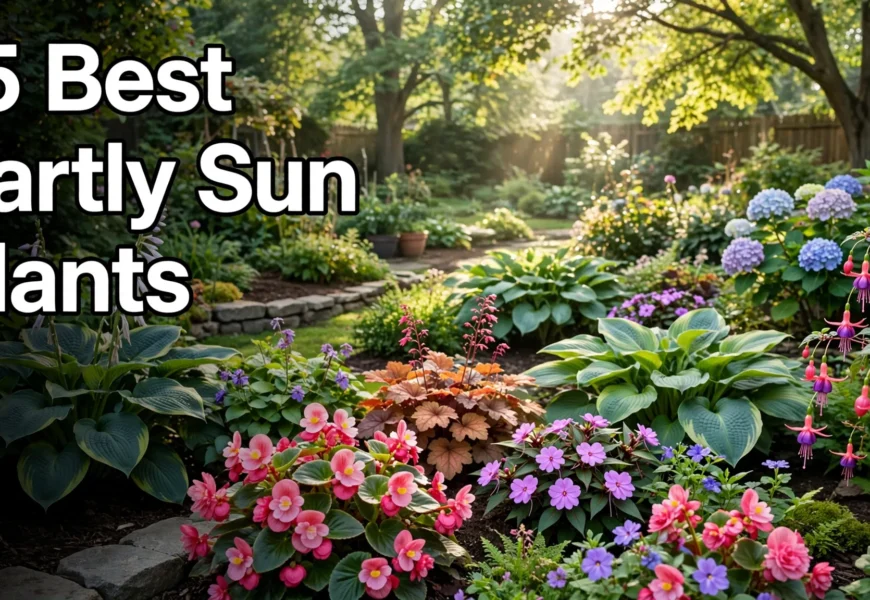
Does your backyard get just a few hours of sunlight instead of staying sunny throughout the day? You can still grow a colorful, lively garden. Many Partly Sun Plants thrive in areas with limited direct sunlight, especially spots that receive morning sun and afternoon shade. From flowering annuals and long-lasting perennials to shrubs and decorative foliage plants, there are plenty of options for different growing spaces. You can plant them in garden beds, along backyard borders, beneath trees or in patio containers.
TL;DR: Best Partly Sun Plants
Partly sun plants generally grow with around 3–6 hours of direct sunlight each day, although needs differ by plant. Begonias, Impatiens, Fuchsia, Hostas, Astilbe and Coral Bells are popular options. Most prefer morning sun, afternoon shade, suitable soil and watering based on soil moisture.
What Are Partly Sun Plants?
Partly sun plants are outdoor plants that grow well with limited direct sunlight rather than full-day exposure. Many need approximately 3–6 hours of direct sunlight, although their sunlight requirements depend on the plant and growing conditions. Morning sun is usually gentler, while intense afternoon sunlight can cause leaf scorch or wilting in some plants. Areas with filtered sunlight or dappled shade can also suit plants that dislike strong direct rays. Partial sun and partial shade are sometimes used interchangeably, but plant labels may describe them differently. Check the growing instructions for each plant before choosing a spot.
Partial Sun vs. Partial Shade: What’s the Difference?
Partial sun and partial shade describe areas that receive sunlight for only part of the day. The main difference is how much direct sunlight plants receive and how much protection they get from stronger rays.
| Light condition | General sunlight | Garden environment |
|---|---|---|
| Full sun | 6+ hours | Open, sunny garden |
| Partial sun | Around 3–6 hours | Morning or afternoon direct sun |
| Partial shade | Often 2–4 hours | Limited direct sun, filtered light |
| Full shade | Very little direct sun | Under dense trees or covered areas |
These hours are general guidelines, not fixed rules. Horticultural references and nursery labels may use slightly different definitions. A plant that tolerates partial sun in a cooler region may need more afternoon protection in a hot climate.
15 Best Partly Sun Plants for Your Garden
The plants below suit different backyard conditions, from cool, moist flower beds to warm patio containers. Some grow mainly for their flowers, while others add color through their leaves. Check the sunlight needs of the specific cultivar before planting, as they can differ within the same plant group.
1. Impatiens
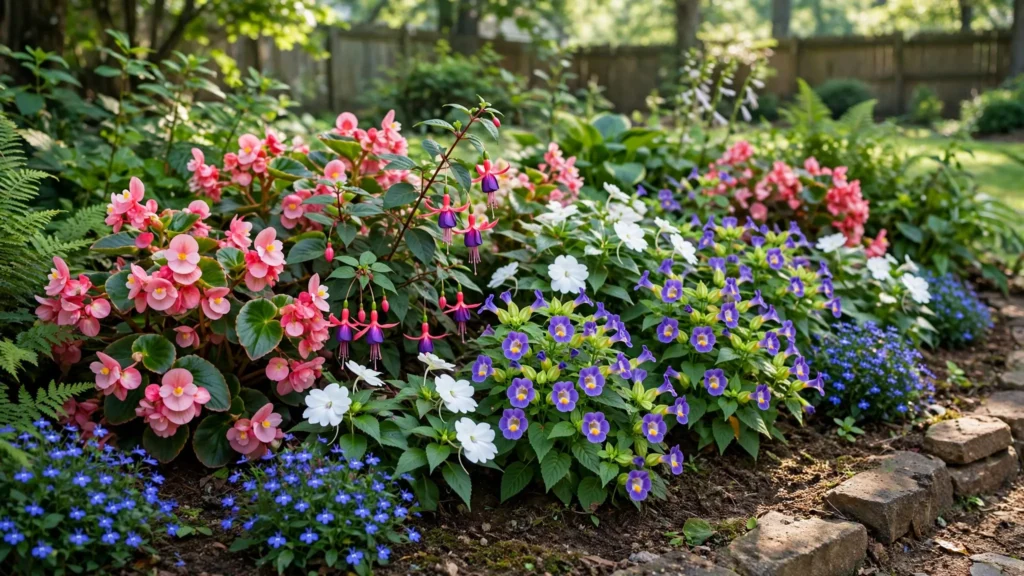
Impatiens are popular flowering annuals with bright blooms in shades of pink, red, white, orange and purple. They grow well in partial shade and prefer moist, well-drained soil. Plant them along flower bed edges, beneath trees or in patio containers. Water when the soil begins to dry, especially during warm weather.
2. Begonias
Begonias offer colorful flowers and decorative leaves, making them useful for partly sunny garden spaces. Many types grow well in filtered sunlight or gentle morning sun, although their needs vary. Wax begonias and some tuberous types are popular for containers and flower beds. Use well-drained soil and avoid keeping the roots waterlogged.
3. Fuchsia
Fuchsia plants are known for their hanging, bell-shaped flowers, which often feature two contrasting colors. They prefer cooler spots with partial shade and protection from strong afternoon heat. Their trailing growth makes them a lovely option for hanging baskets and porch containers. Keep the soil evenly moist, but allow excess water to drain.
4. Torenia (Wishbone Flower)
Torenia, also called wishbone flower, produces small blooms in shades of purple, pink, blue and white. It performs well in partial shade and can add color to garden borders, window boxes and containers. Give it moist, well-drained soil and protect it from intense afternoon sunlight, particularly during hot summer weather.
5. Lobelia
Lobelia produces clusters of small blue, purple, pink or white flowers. It prefers cooler growing conditions and consistent soil moisture, so it can struggle in intense heat. Trailing types look attractive in hanging baskets, while compact varieties work well along garden edges. Afternoon shade can help the plant stay in better condition during summer.
6. Astilbe
Astilbe is a perennial known for its feathery flower plumes, which can appear in pink, red, white or purple. It grows best in partial shade with consistently moist soil. Plant it in shaded flower beds or woodland-style garden spaces. Dry soil and hot afternoon sun can affect its growth and flowering.
7. Hosta
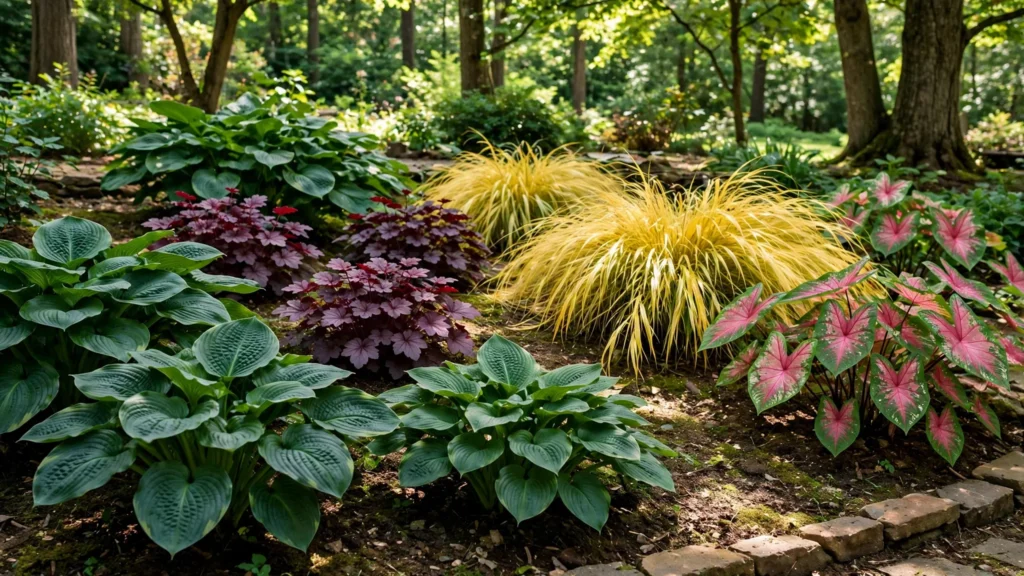
Hostas are grown mainly for their attractive leaves, which come in green, blue-green, yellow and variegated patterns. They prefer partial shade or filtered sunlight and work well under trees and along garden borders. Keep the soil moist but well-drained. Some hosta varieties tolerate more morning sun than others, so check the plant label.
8. Coral Bells (Heuchera)
Coral Bells, also known as Heuchera, are perennial foliage plants with leaves in shades of burgundy, lime green, silver and purple. They usually prefer partial shade, although some varieties tolerate more sunlight in cooler climates. Plant them in well-drained soil along garden borders or near other shade-loving plants. Avoid overly wet soil around their roots.
9. Columbine
Columbine produces delicate, distinctive flowers with spurred petals in colors such as red, yellow, pink, blue and white. It can grow in partial sun or light shade, depending on the climate and variety. Columbine is a good option for cottage-style and pollinator-friendly gardens. Give it well-drained soil and some protection from strong afternoon heat.
10. Bleeding Heart
Bleeding Heart plants have distinctive heart-shaped flowers that hang from arching stems. They usually bloom in spring and prefer partial shade with moist, well-drained soil. They suit woodland-style gardens and shaded flower beds. Their foliage may turn yellow and die back during summer dormancy, which is a normal part of the plant’s growth cycle.
11. Hydrangea
Hydrangeas are flowering shrubs known for their large clusters of white, pink, blue or purple blooms. Many varieties grow well with morning sun and afternoon shade. They are suitable for backyard beds and garden borders, provided they have enough room to mature. Water regularly, particularly during dry weather, and check the mature size before planting.
12. Azalea
Azaleas bring bright spring color with flowers in shades of pink, red, white, orange and purple. They generally prefer filtered sunlight or partial shade, along with acidic, well-drained soil. Plant them in garden beds or along borders where they receive some morning sun. A layer of organic mulch can help maintain soil moisture.
13. Japanese Forest Grass
Japanese Forest Grass is an ornamental grass with graceful, arching leaves, often featuring green, gold or striped patterns. It grows well in partial shade and prefers moist, well-drained soil. Use it along shaded borders, pathways or beneath trees. Its flowing foliage adds texture to garden spaces without relying on colorful flowers.
14. Coleus
Coleus is grown for its colorful foliage, which may feature combinations of green, red, pink, purple and yellow. Many varieties prefer partial shade, although some newer cultivars tolerate more sunlight. Coleus works especially well in patio containers and mixed flower beds. Pinch back the growing tips to encourage a fuller, bushier shape.
15. Caladium
Caladium plants have large, heart-shaped leaves with striking patterns in green, white, pink and red. They prefer warm weather and filtered sunlight, making them suitable for shaded garden beds and patio containers. Keep the soil lightly moist during active growth, but avoid waterlogged conditions. Caladiums are tropical plants, so cold weather can damage their foliage.
Partly Sun Plants Comparison Table
The table below gives a quick look at the plant types, light preferences and general watering needs. Watering frequency will depend on rainfall, temperature, soil and container size.
| Plant | Type | Sunlight | Watering |
|---|---|---|---|
| Impatiens | Annual | Partial shade | Regular |
| Begonia | Annual/perennial | Partial sun | Moderate |
| Fuchsia | Shrub/annual | Partial shade | Regular |
| Astilbe | Perennial | Partial shade | Consistent |
| Hosta | Perennial | Partial shade | Moderate |
| Coral Bells | Perennial | Partial shade | Moderate |
| Hydrangea | Shrub | Partial sun | Regular |
| Azalea | Shrub | Partial shade | Moderate |
| Coleus | Foliage plant | Partial shade | Regular |
| Caladium | Foliage plant | Partial shade | Regular |
These are general growing preferences. Always check the requirements of the specific variety.
How Much Do Partly Sun Plants Cost?
The price of partly sun plants depends on the nursery, plant size, cultivar, season and location. Small starter plants usually cost less than established shrubs or larger container-grown plants. The figures below are rough US retail planning estimates, not verified current market prices.
| Plant | Estimated price |
|---|---|
| Impatiens | $4–$8 |
| Begonia | $5–$12 |
| Fuchsia | $8–$18 |
| Hosta | $10–$25 |
| Astilbe | $12–$25 |
| Hydrangea | $20–$45 |
| Azalea | $15–$35 |
| Coleus | $5–$12 |
Check local nursery prices before buying, as actual costs may be higher or lower.
How to Choose the Right Plants for Your Garden
Start by checking how many hours of direct sunlight your garden receives. Notice whether the area gets gentle morning sun or stronger afternoon rays. Your USDA hardiness zone can help you check whether a perennial or shrub is likely to survive winter in your region, but it does not describe sunlight exposure. Also consider summer heat, humidity, soil moisture and drainage. For backyard beds, raised garden beds and patio containers, choose plants that suit the available space and local growing season.
How to Care for Partly Sun Plants
A little attention to watering, soil and sunlight can help partly sun plants grow well throughout the season.
Water According to Soil Moisture
Check the top layer of soil before watering. Some plants prefer consistently moist soil, while others need it to dry slightly between watering sessions. Avoid watering on a fixed schedule without checking conditions.
Use Well-Drained Soil
Good drainage helps prevent water from collecting around plant roots. Add suitable organic matter to garden soil when needed, but match the soil mix to the plant.
Add Mulch Around Plants
Apply a layer of organic mulch around the base of plants, leaving a little space around stems. Mulch helps slow moisture loss and can reduce weed growth.
Prune and Remove Spent Flowers
Remove faded flowers from plants that benefit from deadheading. Trim damaged or overcrowded growth when needed, following the pruning needs of each plant.
Protect Plants From Intense Afternoon Heat
Move containers to a more sheltered spot during hot weather. For garden beds, use nearby trees, structures or taller plants to provide afternoon shade where needed.
Common Mistakes to Avoid
Avoid planting shade-loving plants where they receive harsh afternoon sunlight. Overwatering in poorly drained soil can damage roots, while ignoring plant tags may lead to unsuitable growing conditions. Check USDA hardiness zones before buying perennials and shrubs. Give plants enough room to reach their mature size, too—crowded growth can reduce airflow and make routine care harder.
Frequently Asked Questions About Partly Sun Plants
1. What are the easiest plants to grow in partial sun?
Impatiens, begonias, hostas and coleus are popular options for partial sun. Choose varieties suited to your climate and water them according to soil moisture.
2. How many hours of sunlight do partly sun plants need?
Most partly sun plants need around 3–6 hours of direct sunlight daily, although exact requirements differ by plant and growing conditions.
3. What flowers grow best in partial shade?
Impatiens, fuchsia, torenia, astilbe and columbine can grow well in partial shade. Their performance depends on climate, soil and variety.
4. Can hydrangeas grow in morning sun and afternoon shade?
Yes. Many hydrangeas grow well with morning sunlight and afternoon shade, especially in warmer regions where strong afternoon heat can stress the plants.
5. Are partial sun and partial shade the same?
Not always. The terms can overlap, but partial sun often suggests more direct sunlight, while partial shade describes greater protection from direct rays.
Conclusion
Partly sun plants make it possible to grow a colorful garden even when your backyard does not receive full-day sunlight. Flowers, perennials, shrubs and foliage plants all offer good options. Check sunlight hours, soil and local growing conditions before choosing plants for your space.