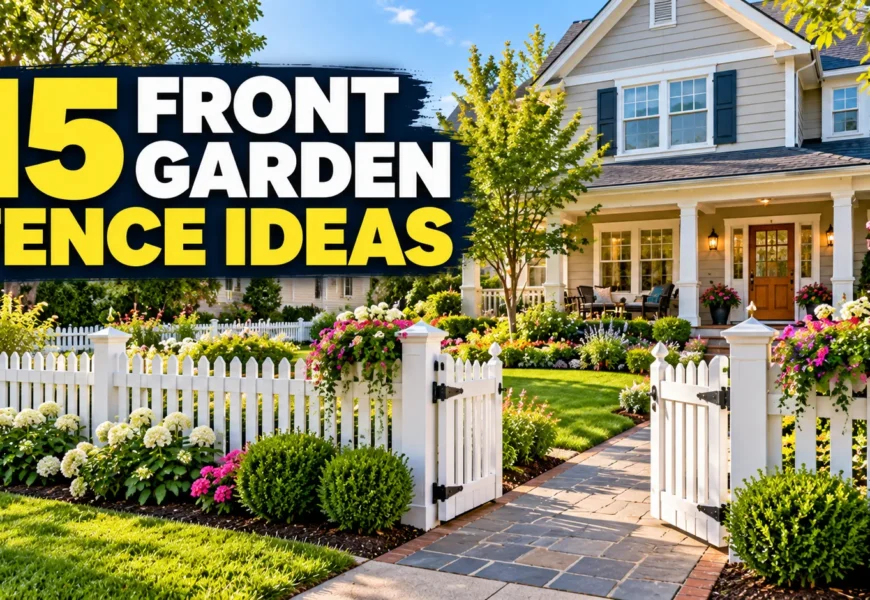
A well-chosen fence can give your front garden a finished look, define your property line and add privacy without making your home feel closed off. Popular fence ideas for front garden spaces include classic white picket fences, modern horizontal wood slats, black metal railings and easy-care vinyl designs. The right style depends on your home’s exterior, front yard size, budget and how much upkeep you’re comfortable with. Some fences frame flower beds beautifully, while others create a more private entryway. A few thoughtful choices can make a real difference before you even reach the front door.
TL;DR: Best Fence Ideas for Front Garden
The best fence ideas for front garden spaces balance curb appeal, privacy, cost and maintenance. White picket fences suit traditional homes, horizontal wood slats complement modern exteriors, and black metal railings maintain an open view. Vinyl and composite fences are worth considering for homeowners who want less routine upkeep.
15 Fence Ideas for Front Garden Spaces
1. Classic White Picket Fence
A white picket fence brings a familiar, welcoming look to cottage, farmhouse and traditional homes. Its open design frames lawns and flower beds without hiding the house. Choose weather-resistant paint and check the finish regularly, especially where rain, snow or strong sunlight can cause wear.
2. Modern Horizontal Wood Slat Fence
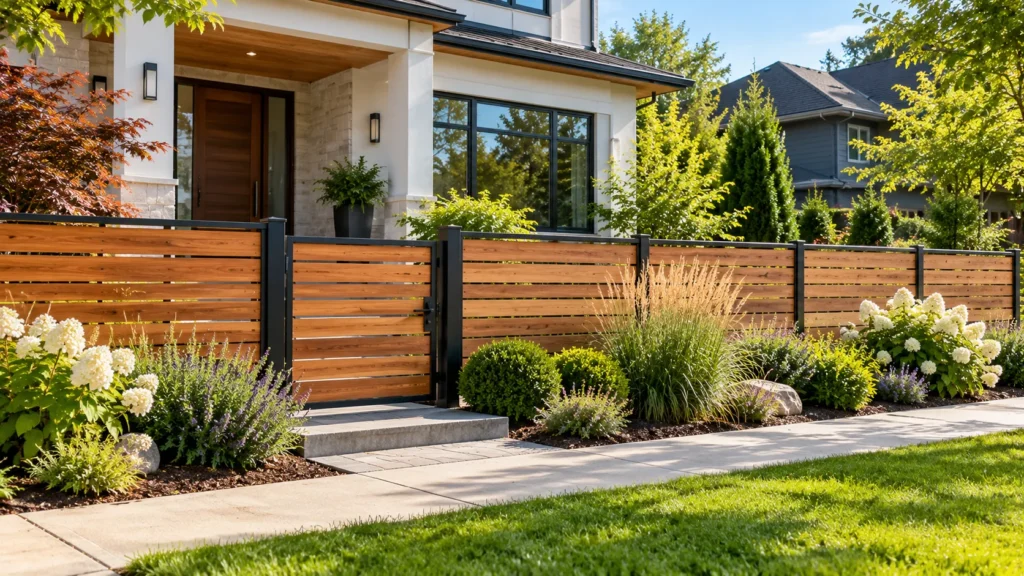
Horizontal wood fencing gives contemporary homes clean lines and a warm, natural finish. Wider gaps create an open feel, while closer slats offer more screening from the street. Cedar or treated lumber can work well, but wood needs periodic sealing to protect it from moisture and sun.
3. Black Metal Garden Railings
Black metal fence ideas work well around brick homes, modern facades and formal gardens. Slim railings define the front yard while leaving views of the lawn and landscaping open. Aluminum is lighter and resists rust, while steel needs a suitable protective finish to guard against corrosion.
4. Low Decorative Front Garden Fence
A low fence is a simple way to outline flower beds, separate planting areas from the lawn and give the front yard a tidy edge. Short pickets or ornamental metal panels suit smaller homes and open gardens. Check local height rules before buying materials.
5. Natural Cedar Fence
Cedar has a warm grain and natural color that pairs nicely with stone, brick and neutral siding. It can be left to weather toward a silvery tone or treated to retain more of its original color. Sealing helps limit moisture damage, although the finish will need attention over time.
6. Vinyl Picket Fence
Vinyl picket fencing offers a traditional appearance without the regular painting required by many wood fences. It is available in white and other colors, with different picket shapes and rail designs. Compare panel thickness, hardware and product warranties, since quality can differ between manufacturers.
7. Fence with Flowering Plants
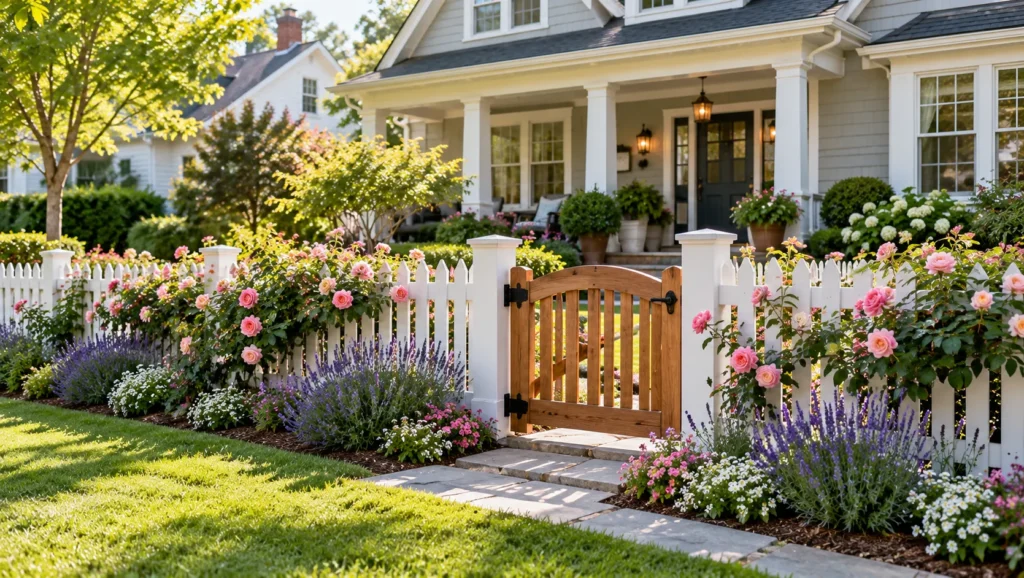
Pair a picket fence with roses, lavender, hydrangeas or seasonal flowers for a colorful front yard. Keep plants far enough from the fence to allow airflow and access for cleaning or repairs. Check each plant’s mature size and sunlight needs before placing it along the boundary.
8. Trellis Fence with Climbing Greenery
A trellis fence adds height and texture without using a solid panel. Climbing roses, clematis and other suitable vines can soften the structure and bring seasonal color. Choose a trellis strong enough for mature plant growth, and prune regularly so stems do not block paths or damage the fence.
9. Wood and Metal Combination Fence
Wood panels framed by dark metal create a balanced mix of natural warmth and a crisp, modern finish. This style works well with contemporary homes, simple landscaping and dark window frames. Make sure the wood and metal components are rated for outdoor use and can be maintained separately.
10. Rustic Cottage-Style Fence
A rustic wooden fence suits informal gardens, older homes and cottage-style exteriors. Split rails, spaced boards or lightly weathered timber can give the front yard a relaxed appearance. Since open rustic styles offer little privacy, use them to frame planting areas rather than block street views.
11. Fence with Built-In Planters
Built-in planters combine a boundary with space for flowers, herbs or compact ornamental grasses. They’re handy in narrow front gardens where separate pots may take up too much room. Plan for drainage, water-resistant construction and enough soil depth for the plants you want to grow.
12. Semi-Private Slatted Fence
A semi-private fence uses spaced boards or angled slats to reduce direct views while allowing some air and light through. It suits front yards that face a busy sidewalk or nearby homes. Check the spacing from inside and outside the property, as privacy changes with viewing angle.
13. Composite Low-Maintenance Fence
Composite fencing offers a wood-like appearance with less routine painting or sealing than many timber designs. It can suit homeowners who prefer a consistent finish and don’t want frequent surface treatment. The upfront price may be higher than basic wood, so compare warranties and panel specifications before committing.
14. Fence with a Matching Garden Gate
A matching gate gives the front fence a clear entrance and ties the design together. Coordinate the gate’s material, color and height with the surrounding panels, then check that it opens freely without hitting plants, steps or parked cars. Good hinges and a suitable latch matter for daily use.
15. Low Fence with a Flowering Hedge
A low fence paired with a flowering hedge creates a softer boundary than fencing alone. Small shrubs can add greenery, seasonal blooms and texture along the street. Leave enough room for mature growth and trimming, and choose plants suited to your climate rather than those that quickly outgrow the space.
Front Yard Fence Cost: Materials and Installation
Fence installation prices in the United States depend on material, height, design and labor. Angi’s 2026 national estimates place many installed fence projects between $6 and $50 per linear foot, with material-specific ranges shown below. Angi These figures are planning estimates, not fixed quotes.
| Fence material | Approximate installed cost per linear foot |
|---|---|
| Wood | $10–$45 |
| Vinyl | $15–$40 |
| Composite | $11–$45 |
| Aluminum | $17–$90 |
The quoted price may include materials and installation, but confirm what’s covered before comparing bids. Fence height, custom panels, gates, old fence removal, uneven ground and site preparation can raise the total. Ask at least two or three local contractors for itemized quotes, and check whether permits or disposal fees are extra.
Which Front Yard Fence Material Is Best?
The right material depends on the look you want and how much maintenance you can manage.
| Material | Best for | Main consideration |
|---|---|---|
| Wood | Natural, customizable appearance | Sealing, painting and rot |
| Vinyl | Easy routine maintenance | Product quality and upfront cost |
| Aluminum | Open views and decorative styles | Finish and corrosion protection |
| Composite | Wood-like appearance | Initial investment |
| Hedge | Natural garden boundaries | Trimming and growth time |
Wood offers flexibility in design, while vinyl is easy to wash. Aluminum suits decorative, open fencing, and composite can reduce routine surface care. A hedge adds greenery but takes time to fill out and needs regular trimming. Consider local weather, durability and long-term upkeep alongside the purchase price.
How to Choose the Right Front Garden Fence
Match the Fence to Your Home’s Exterior
A white picket fence pairs naturally with traditional or farmhouse homes, while horizontal slats often suit contemporary exteriors. Black metal railings work with brick, stone and simple modern facades. Pick a color that complements your siding, trim or front door instead of competing with them.
Consider Privacy, Garden Size and Maintenance
Low railings and widely spaced slats can make a small front yard feel more open. Closer boards offer more screening but may make a narrow space feel enclosed. Consider your local climate, too: damp conditions can challenge untreated wood, while intense sun can affect some finishes and plastics.
Check Local Fence Rules Before Installation
Check your city or county zoning rules, property line, easements and any permit requirements before digging post holes. HOA guidelines may restrict materials, colors or fence styles. Corner lots can have extra visibility requirements near driveways and streets. Rules differ by location; for example, Seattle and Orlando publish their own front-yard fence requirements. Seattle Government+1 Confirm the rules that apply to your address before ordering a fence.
Common Front Yard Fencing Mistakes
A fence can look out of place if its style clashes with the house or blocks a small garden. Don’t ignore weather exposure and fence maintenance, either. Measure gate clearance, confirm the property line and check local regulations before installation. A little planning can prevent costly adjustments later.
Frequently Asked Questions
What Is the Best Fence for a Front Garden?
The best option depends on your home’s style and your priorities. White picket fencing suits traditional homes, metal railings preserve street views, and wood slats provide more screening. Compare the appearance, upkeep and local rules before deciding.
What Is the Cheapest Fence for a Front Yard?
Costs vary by location and design. A simple wood picket or rail fence may cost less than custom composite or decorative metal fencing. Compare installed quotes, not just material prices, and include future painting, sealing or repair costs.
Which Fence Makes a Small Front Yard Look Bigger?
Low fences and open metal railings help preserve sightlines, making a small front yard feel less enclosed. Spaced slats can also work if you want a more modern look without a solid wall.
What Is the Best Low-Maintenance Front Yard Fence?
Vinyl and composite fencing are popular options for reducing routine painting and sealing. Vinyl is generally easy to wash, while composite products vary by brand. Review care instructions, warranty terms and the expected upfront cost.
How High Can a Front Yard Fence Be?
The permitted height depends on local zoning, the fence’s position, visibility near corners and any HOA restrictions. Some areas limit front-yard fences to around four feet, but that is not a universal rule. Check with your local planning or building department before installation.
Final Thoughts
The right fence ideas for front garden should suit your home’s architecture, fit the space and work with your budget. Compare materials, consider how much privacy you need and plan for maintenance before making a choice. A thoughtful design can frame your garden beautifully without hiding the home itself.