
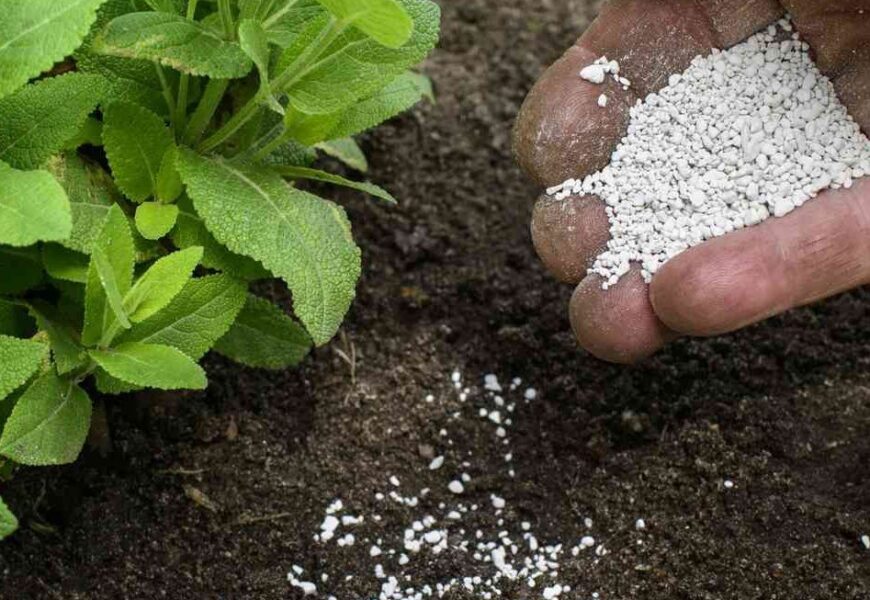
Phosphorus for grass is often misunderstood. Learn when your lawn actually needs it, what too much does, and how to apply it correctly without damaging your soil.
Introduction
Walk into any garden centre, and you’ll see row after row of lawn fertilisers. Some are labelled “starter” or “new lawn” and have a noticeably different set of numbers than the regular maintenance products. That difference, in many cases, comes down to one nutrient: phosphorus. It’s the middle number in the N-P-K system — and it’s also the nutrient most often misapplied, over-applied, and misunderstood by home lawn enthusiasts.
Here’s the thing about phosphorus: most established lawns in North America don’t need it. But new lawns desperately do. Getting this distinction wrong either wastes money and contributes to water pollution or leaves a new seeding or sodding with weak, shallow roots that struggle through its first summer. This guide gives you the honest, accurate picture.
What Phosphorus Does for Grass
Phosphorus (chemical symbol P) is one of the three primary macronutrients required by all plants, alongside nitrogen and potassium. In grass, phosphorus plays specific and critical roles:
Root development: Phosphorus is directly involved in energy transfer in plant cells (specifically in adenosine triphosphate, ATP — the molecule cells use for energy). Strong root development requires adequate phosphorus, particularly in the early stages of grass establishment.
Seedling establishment: Young grass plants need phosphorus to establish root systems quickly. Without it, seedlings develop slowly and are vulnerable to drought, foot traffic, and competition from weeds.
Stress tolerance: Phosphorus contributes to the plant’s ability to withstand cold temperatures and recover from physical stresses. It’s particularly important for preparing turf for winter.
Flowering and seed production: Though lawns are mowed before they set seed, grass plants naturally channel energy toward reproduction when conditions trigger it. Phosphorus supports this process at the cellular level.
What phosphorus does NOT significantly do in grass: it doesn’t green up the lawn (that’s nitrogen), it doesn’t strengthen blades against wear (that’s potassium), and it doesn’t directly drive top growth (also nitrogen). Phosphorus is fundamentally a root and establishment nutrient.
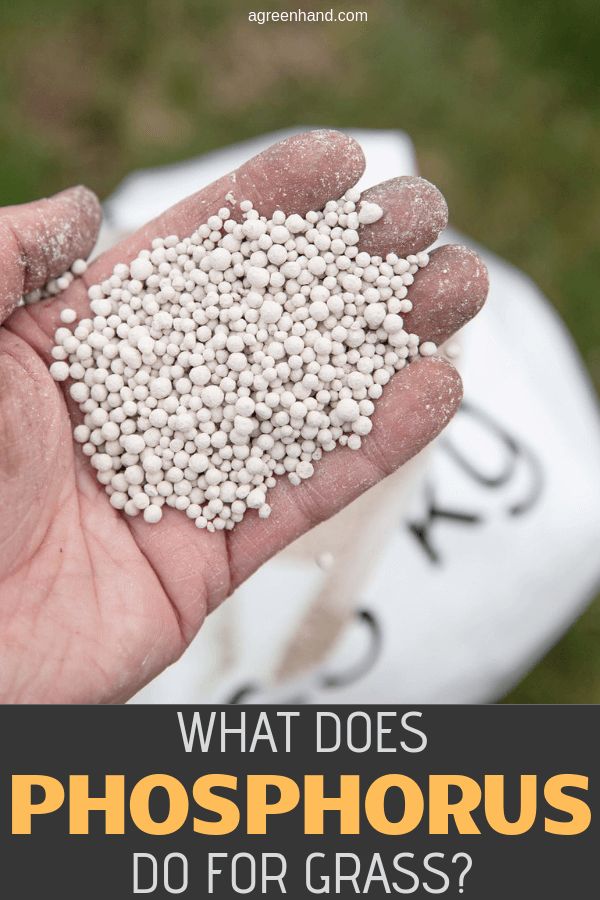
The Critical Distinction: New Lawn vs. Established Lawn
This is the single most important thing to understand about phosphorus and grass.
New lawns, whether seeded or not, need phosphorus. Roots are establishing from scratch. The soil environment is often disturbed from grading, compaction, or construction activity. Phosphorus at planting or seeding time directly supports the root development that determines how successfully the new turf establishes.
Established lawns — grass that has been growing for a season or more — almost universally have adequate soil phosphorus already. Decades of fertiliser application have built up significant phosphorus reserves in most residential soils. Soil tests consistently show that phosphorus is one of the least likely nutrients to be deficient in established lawn areas.
Adding phosphorus to an established lawn that doesn’t need it doesn’t help the grass. It accumulates in the soil, and excess phosphorus can run off into waterways during rain events, causing serious environmental damage (algal blooms, oxygen depletion, and fish kills). This is why many states — particularly coastal states and those near the Great Lakes — have restricted or banned phosphorus fertilisers for established lawns.
Phosphorus Deficiency in Grass: What It Actually Looks Like
If phosphorus deficiency is uncommon in established lawns, what does it look like when it does occur?
True phosphorus deficiency symptoms in grass include:
- Purplish or reddish coloration on grass blades and sheaths (particularly visible in cool weather)
- Slow establishment in new seedings despite adequate nitrogen
- Poor root development visible when you pull up a plug of turf
- Thin, sparse growth even after nitrogen applications
The purple colouration is the most commonly cited visual symptom, but it’s important to note that this same colour change can also result from cold temperatures, drought stress, or compacted soil. Visual symptoms alone aren’t enough to diagnose phosphorus deficiency – a soil test is necessary for confirmation.
What cool weather often does: grass plants cannot access soil phosphorus effectively when soil temperatures are below 55°F (13°C). In early spring, even soils with adequate total phosphorus may not release it fast enough for young or stressed plants. A small amount of water-soluble phosphorus fertiliser in spring can help in these conditions.
Reading a Soil Test for Phosphorus
A soil test is the only reliable way to know whether your lawn soil needs phosphorus. Most university extension soil testing labs report phosphorus in either pounds per acre or parts per million (ppm), with interpretive ranges for different crops.
For lawn grasses, the general interpretive framework looks like this:
| Soil Test P Level | Interpretation | Recommendation |
|---|---|---|
| < 10 ppm | Very low | Apply phosphorus at planting |
| 10–20 ppm | Low | Phosphorus beneficial at planting |
| 20–40 ppm | Adequate | No supplemental P needed |
| 40–80 ppm | High | Do not apply phosphorus |
| > 80 ppm | Very high | Avoid all P applications |
Many suburban residential soils test in the “adequate” to “high” range because homeowners have been applying traditional 3-number fertilisers for years without removing the phosphorus they add.
If your soil tests at adequate or above, switch to a 0-0-x or nitrogen-only lawn fertiliser. You’ll save money, protect local waterways, and lose nothing in terms of lawn quality.
When and How to Apply Phosphorus for New Grass
If you’re seeding a new lawn, establishing sod, or renovating a bare patch, here’s how to use phosphorus effectively:
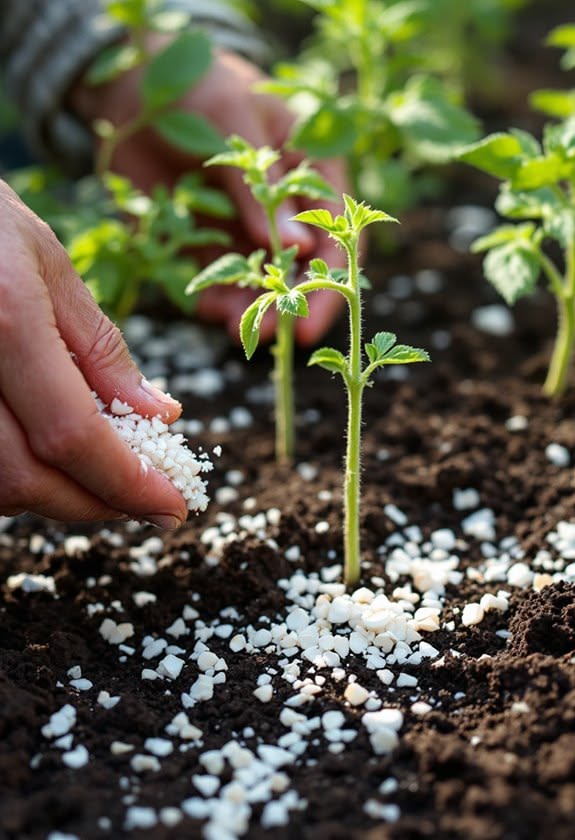
number) – something Before seeding or sodding: Incorporate phosphorus into the top 3 to 4 inches of soil. Use a starter fertiliser with a high middle number (the P number) — something like 6-24-6, 9-23-7, or similar. Broadcasting and tilling are far more effective than surface application, because phosphorus moves very slowly through soil and needs to be near roots to be absorbed.
At seeding: Some gardeners apply a light surface application of starter fertiliser at seeding time in addition to the pre-seeding incorporation. Research suggests this provides a modest additional benefit for seedling establishment.
After emergence: Once the new lawn is established and growing well (typically after the second mowing), switch to a standard lawn maintenance fertiliser — ideally without phosphorus if a soil test confirms adequate levels.
For sod: Phosphorus is especially valuable under new sod. The sod roots are recovering from the stress of being cut and transplanted. Good phosphorus availability speeds re-rooting dramatically.
Types of Phosphorus Fertilizer for Lawns
Starter Fertilizers
Products labelled “starter fertiliser” or “new lawn fertiliser” are the most practical source for home lawn use. They’re formulated specifically for establishment and have a high P number in the analysis. Triple superphosphate (0-45-0) and diammonium phosphate (18-46-0) are common phosphorus sources in these blends.
Organic Phosphorus Sources
If you’re following an organic lawn care programme, bone meal is the primary organic phosphorus source. It releases slowly as soil microbes break it down, making it less water-soluble and therefore less prone to runoff than synthetic starter fertilisers. Apply at the same time as seeding or sodding, worked into the soil rather than broadcast on the surface.
Rock phosphate is another organic option — a mined mineral that releases very slowly and is best suited to acidic soils and long-term programmes.
Complete Lawn Fertilizers With Phosphorus
Standard multi-nutrient lawn fertilisers like 12-12-12 or 10-10-10 include phosphorus along with nitrogen and potassium. These are appropriate for genuinely phosphorus-deficient soils or for first-time applications to new lawns but should not be used routinely on established lawns where phosphorus is already adequate.
State Laws and Phosphorus Restrictions
This is increasingly relevant for home lawn care. Many states have enacted regulations limiting or prohibiting the use of phosphorus-containing lawn fertilisers on established turf. States with some form of restriction include Minnesota, Wisconsin, Michigan, New York, New Jersey, Maryland, Virginia, and Florida, among others.
The reasoning: established lawns don’t need added phosphorus, and the excess runoff causes documented environmental damage. Exemptions typically allow phosphorus use for new lawn establishment and in situations where a soil test confirms deficiency.
Before buying a phosphorus-containing lawn fertiliser, check your state’s regulations. Violations can carry fines, and the information is readily available through your state’s environmental or agriculture department website.
Phosphorus and Soil pH: The Availability Connection
Here’s something many lawn owners don’t realise: soil pH dramatically affects how much of the phosphorus in your soil is actually available to grass plants. Phosphorus availability is highest between pH 6.0 and 7.0 — the slightly acidic to neutral range that lawn grasses prefer anyway.
In highly acidic soils (pH below 5.5), phosphorus bonds with iron and aluminium and becomes largely unavailable, even when total soil phosphorus levels appear adequate on a test. In alkaline soils (pH above 7.5), phosphorus bonds with calcium and similarly becomes unavailable.
The practical implication: if your soil pH is significantly off, correcting it with lime or sulphur may improve phosphorus availability without adding any fertiliser at all. This is why soil pH testing should accompany any phosphorus deficiency diagnosis.
Conclusion
Phosphorus and grass have a nuanced relationship. For new lawns, it’s essential – root establishment depends on it. For established lawns, it’s usually unnecessary and potentially harmful if over-applied.
The single best action you can take is a soil test. If your phosphorus levels are adequate (as they are in most established residential soils), skip the P and use a nitrogen-potassium formula. If you’re seeding or sodding, get a starter fertiliser into the root zone before you plant.
Getting phosphorus right saves money, protects local waterways, and actually produces better results than reflexively adding it every season. That’s a straightforward win on every front.
FAQs
Does grass need phosphorus fertiliser?
Most established lawns don’t need added phosphorus — soil levels are typically adequate from prior fertilisation. New lawns and areas being seeded or sodded do benefit significantly from phosphorus at establishment time.
What is the best phosphorus fertiliser for a new lawn?
Starter fertilisers with a high middle number (like 6-24-6 or 9-23-7) are formulated specifically for lawn establishment. Incorporated into the top few inches of soil before seeding provides the best results.
Can too much phosphorus hurt grass?
Excess phosphorus doesn’t directly damage grass in the way that too much nitrogen burns it, but it accumulates in soil to the point where it becomes problematic – locking out other micronutrients and running off into waterways. Follow soil test recommendations rather than applying phosphorus routinely.
How do I know if my lawn needs phosphorus?
A soil test is the only reliable way. Visual symptoms like purple grass blades are suggestive but not definitive. Many extension services offer soil testing for $15–30.
Is phosphorus fertiliser banned in my state?
It depends. Many states restrict phosphorus in lawn fertilisers for established turf. Check your state’s environmental or agriculture department website for current regulations.