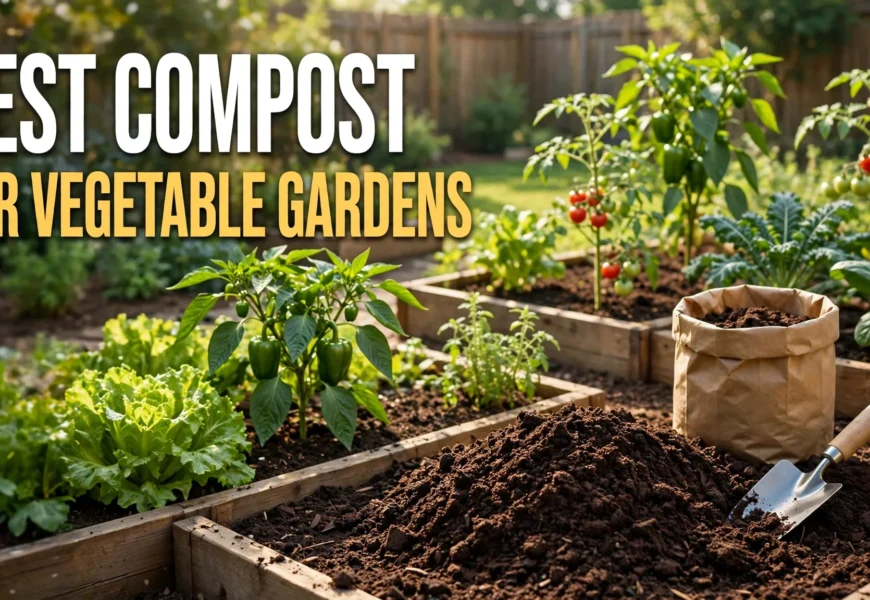
A healthy vegetable garden starts with good soil, and compost can make a noticeable difference. The best compost for vegetable garden beds is usually mature, high-quality plant-based compost that adds organic matter and improves soil structure. Composted cow manure is another useful option, while worm castings can provide extra nutrients when mixed into garden soil. But not every compost works the same way. Your soil type, garden setup, and the vegetables you grow all play a part in deciding which option makes sense.
TL;DR: What’s the Best Compost for Vegetable Garden?
Mature plant-based compost is a versatile choice for most vegetable gardens because it improves soil structure and adds organic matter. Composted cow manure is another good option, while worm castings work well as a supplementary amendment. Choose finished compost that suits your soil rather than buying a product based on its label alone.
What Is the Best Compost for Vegetable Garden?
Good vegetable garden compost should be fully decomposed, have an earthy smell, and contain no obvious fresh plant waste or unpleasant odors. It adds organic matter, helps improve soil texture, and supports better moisture management.
Finished compost is stable enough to use around growing plants. Unfinished compost may continue breaking down in the garden, temporarily tying up nitrogen or affecting plant growth. Compost quality matters more than attractive packaging or claims printed on a bag.
4. 5 Best Types of Compost for Vegetable Gardens
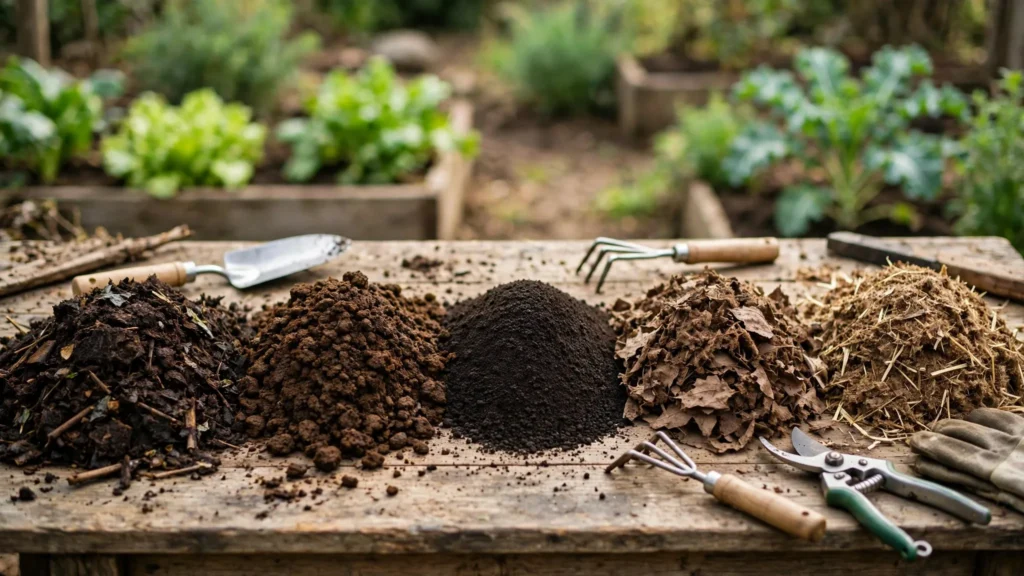
Different compost types serve different purposes. Some improve soil structure, while others add organic matter or contribute plant nutrients. Here are five options worth considering for a backyard vegetable garden.
1. Plant-Based Compost — Best Overall Choice
Plant-based compost is made from materials such as leaves, grass clippings, wood chips, and other yard waste. It is a versatile option for vegetable beds because it adds organic matter and helps improve soil texture. It can also support moisture retention in sandy soil and make compacted soil easier to work with. Look for finished compost with a crumbly texture and an earthy smell. For most home gardeners, this is a good starting point.
2. Composted Cow Manure — Best for Nutrient Support
Composted cow manure adds organic matter and contributes nutrients to garden soil. It can be useful before planting tomatoes, peppers, squash, and other vegetables. But manure-based compost can contain higher salt levels than plant-based compost. Check the product label and avoid applying thick layers year after year without a soil test. Fully composted manure is a better choice for garden beds than fresh manure.
3. Worm Castings — Best Supplementary Amendment
Worm castings are produced as worms break down organic materials. They have a fine, soil-like texture and contain plant nutrients. Gardeners often mix small amounts into potting mixes, seed-starting blends, or vegetable bed soil. Worm castings can cost more per pound than regular compost, so using them as a supplement is often more practical than filling an entire garden bed with them.
4. Leaf Mold — Best for Moisture Retention
Leaf mold forms when fallen leaves decompose over time. It is valued for improving soil texture and helping soil hold moisture. This can be useful in sandy garden beds that dry out quickly during hot summer weather. Leaf mold generally contributes fewer nutrients than manure-based compost, so treat it mainly as a soil conditioner.
5. Mushroom Compost — Best for Soil Conditioning
Mushroom compost is a growing medium left after commercial mushroom production. It can add organic matter and improve soil texture, but its composition varies by producer. Some products contain manure, straw, or other materials, and salt levels can be high. Check the label and use it according to the supplier’s recommendations, especially around salt-sensitive vegetables.
| Compost type | Best use | Main benefit |
|---|---|---|
| Plant-based | General vegetable beds | Improves soil structure |
| Cow manure | Nutrient support | Adds organic matter and nutrients |
| Worm castings | Supplementary use | Contributes plant nutrients |
| Leaf mold | Sandy soil | Helps retain moisture |
| Mushroom compost | Soil conditioning | Adds organic matter |
5. Best Bagged Compost for Vegetable Gardens
Bagged compost is convenient for small backyard gardens, containers, and raised beds. You can find it at many US garden centers and home improvement stores. These products are worth comparing:
Products Worth Considering
- Espoma Organic Land & Sea Gourmet Compost: Comes in a 1-cubic-foot bag. Its regional formulations include aged forest products, peat moss, humus, and crab and lobster meals. Check the local label because ingredients can vary by region.
- Black Kow Organic Cow Manure Blend: A 1-cubic-foot product containing cow manure and compost. It is made for vegetable beds, flower beds, and other garden uses.
- Charlie’s Compost: A chicken-manure-based product available in 10-pound and 40-pound bags, as well as larger totes. Check its concentrated formulation before deciding how much to apply.
- Coast of Maine Lobster Compost: A compost option made with lobster-related organic materials. Check the specific product’s ingredients and directions before purchasing.
| Product | Main Consideration | Suitable Use |
| Espoma Land & Sea Gourmet Compost | Check regional ingredients and product formulation | Improving garden soil and adding organic matter |
| Black Kow Composted Cow Manure | Composted cow manure blend; check bag instructions | Vegetable garden beds |
| Charlie’s Compost | Chicken manure-based compost; check application directions | Supplementary soil amendment |
| Coast of Maine Lobster Compost | Check lobster-based ingredients and specific product formulation | Garden soil conditioning |
Product details and bag sizes are based on manufacturer information.
6. How Much Does Vegetable Garden Compost Cost?
Compost prices in the United States vary by brand, bag size, ingredients, and location. Standard bagged compost is generally less expensive than specialty organic blends or worm castings. Bulk compost may cost less per cubic foot, although delivery charges can change the final bill.
| Compost option | Approximate US price |
|---|---|
| Standard bagged compost (1 cu. ft.) | $5–$12 |
| Organic bagged compost (1 cu. ft.) | $8–$18 |
| Composted manure (1 cu. ft.) | $4–$10 |
| Worm castings (small bag) | $10–$25 |
| Bulk compost (per cubic yard) | $30–$75 |
These are planning estimates, not live retail quotes. Compare the price per cubic foot rather than the bag price alone. Also ask local suppliers about delivery fees, minimum orders, and screened versus unscreened compost.
7. How to Choose the Right Compost for Your Vegetable Garden
Start by checking the ingredients and compost maturity. Finished compost should have a dark, crumbly appearance and a pleasant earthy smell. Avoid products with a strong ammonia or rotten odor, visible fresh manure, or large amounts of undecomposed material.
Your soil type matters, too. Sandy soil may benefit from compost that improves moisture retention, while clay soil can benefit from regular additions of suitable organic matter. Look for product testing information when available. An organic label does not automatically tell you the compost’s nutrient content or salt level.
| Gardening need | Suitable option |
|---|---|
| General vegetable beds | Mature plant-based compost |
| Sandy soil | Finished compost or leaf mold |
| Clay soil | Mature plant-based compost |
| Nutrient support | Finished composted manure |
| Raised beds | Quality compost as part of a soil mix |
8. How Much Compost Should You Add to a Vegetable Garden?
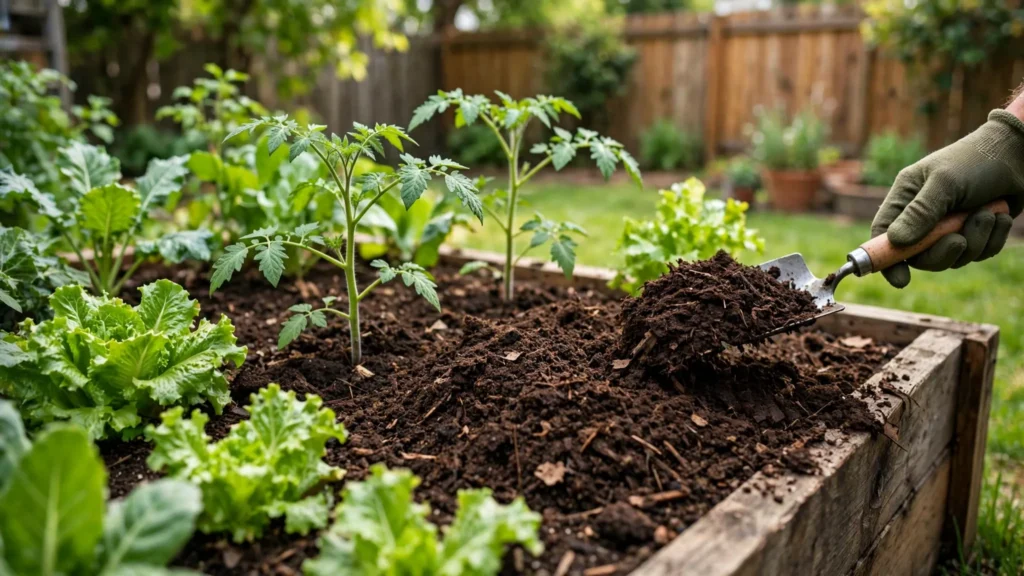
The amount depends on your existing soil, compost type, and garden age. For a new in-ground vegetable bed, a 3–4-inch layer of suitable plant-based compost is a common starting recommendation. Established beds may need only ¼–1 inch annually.
| Garden condition | Starting guideline |
|---|---|
| New garden beds | 3–4 inches |
| Established garden beds | ¼–1 inch annually |
| Raised garden beds | Based on soil mix and testing |
Don’t fill a raised bed with pure compost. Use a suitable garden soil mix instead. Manure-based compost may contain extra salts, so follow soil test recommendations before adding more. Excessive compost can contribute to nutrient imbalances and salt buildup.
9. How to Use Compost in a Vegetable Garden
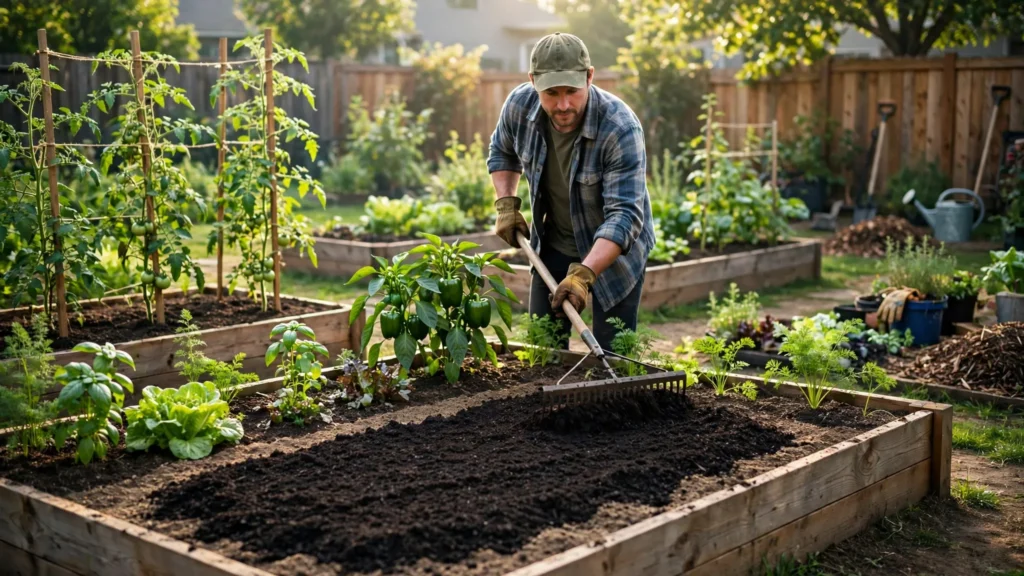
Start by removing weeds, rocks, and old plant debris from the garden bed. Spread finished compost evenly across the soil, then work it into the upper soil layer with a garden fork or rake if preparing a new bed. For an established bed, a thin top-dressing may be enough. Water the bed after application and prepare it for planting. Avoid piling compost against plant stems.
10. Compost vs. Fertilizer: What’s the Difference?
Compost and fertilizer serve different purposes. Compost adds organic matter, improves soil texture, and supports moisture management. Fertilizer supplies nutrients such as nitrogen, phosphorus, and potassium in more concentrated amounts. Compost does contain nutrients, but their release is often slow and variable. A soil test can show if your vegetable garden needs additional fertilizer instead of another layer of compost.
11. Common Compost Mistakes to Avoid
- Using unfinished compost: It may contain unstable materials that interfere with plant growth.
- Applying too much manure: Excess salts and nutrients can build up in garden soil.
- Skipping soil tests: You may add nutrients your garden doesn’t need.
- Ignoring contamination: Check the source and quality of compost materials.
- Filling raised beds with pure compost: Use a suitable soil mix with compost as one component.
12. Frequently Asked Questions
What is the best compost for growing vegetables?
Mature plant-based compost is a good choice for most vegetable gardens. It adds organic matter and improves soil structure.
Is cow manure compost good for vegetable gardens?
Yes. Properly composted cow manure adds organic matter and nutrients. Use it according to product directions and soil test results.
Is mushroom compost safe for vegetables?
Mushroom compost can be used in vegetable gardens, but check its salt content and ingredients before applying it.
How often should you add compost to a vegetable garden?
Established vegetable beds commonly receive a thin layer of compost each year. A soil test can help determine the amount needed.
Can you grow vegetables in compost alone?
It is generally better to grow vegetables in a suitable soil mix rather than pure compost. Compost works best as a soil amendment.
Conclusion
Mature plant-based compost is a reliable starting point for most vegetable gardens. Composted manure, worm castings, and leaf mold also have useful roles. Check the ingredients, compare prices, and consider your soil condition before buying. A suitable compost mix can give your backyard garden a healthier start.