
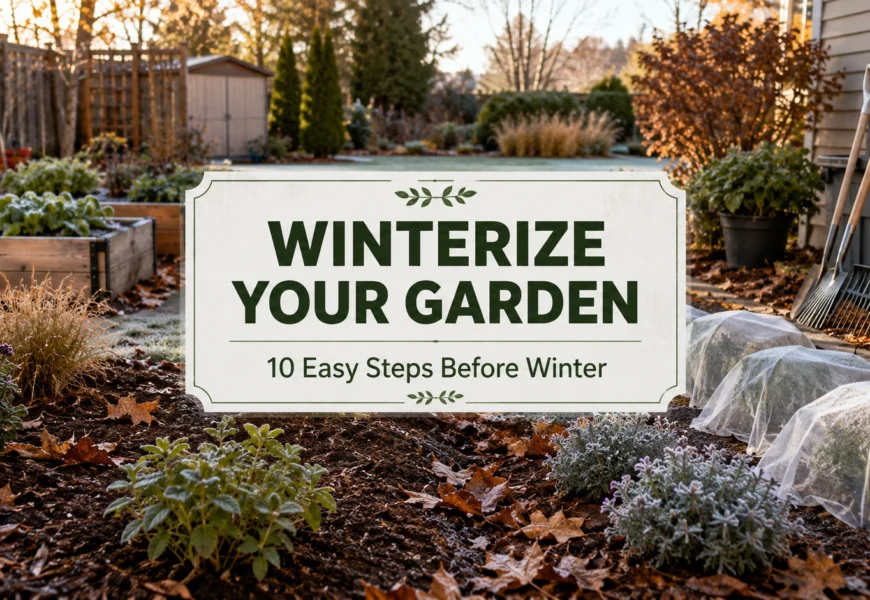
Learning how to winterize your garden before the first hard frost can protect plants, soil, containers, and garden equipment from winter damage. A few timely steps — from mulching root zones to protecting frost-sensitive plants — can also make spring cleanup much easier.
There’s a specific kind of regret every gardener knows: waking up to the first hard frost and realizing the garden was never properly prepared. Hoses are still connected, tender plants are uncovered, and exposed roots have little protection from freezing soil.
Cold temperatures, frost, and winter winds can stress plants, especially young plants, container-grown specimens, and marginally hardy varieties. Knowing how to winterize your garden means preparing each part of the garden at the right time, so plants enter dormancy with better protection and soil is ready for healthy spring growth.
The process is straightforward: clean garden beds, add winter mulch, protect sensitive plants from frost, prepare the soil, prune selectively, winterize containers and irrigation, and store garden tools properly.
Quick Winter Garden Checklist
Before diving into the details, here’s a fast reference for the essentials:
- Remove dead plants, weeds, and diseased foliage
- Prepare raised garden beds and vegetable beds for freezing temperatures
- Add a protective mulch layer around root zones
- Cover or relocate frost-sensitive plants
- Protect perennial plants and shrubs from winter frost
- Amend soil with compost and organic matter
- Prune selectively — not everything needs cutting back
- Give your lawn a final mow, aeration, and fall fertilizer
- Move containers to sheltered spots and reduce watering
- Clean, sharpen, and store garden tools
- Drain and disconnect irrigation lines and hoses
- Check on your garden periodically through the cold months
Why Winter Garden Preparation Matters
Knowing how to winterize your garden helps reduce the damage caused by freezing temperatures, frost, and harsh winter winds. Young plants, container-grown specimens, and marginally hardy plants are especially vulnerable because their roots and above-ground growth may not tolerate sudden temperature drops.
A few practical winter plant protection steps — especially mulching, frost protection, proper watering, and selective pruning — can help stabilize soil temperatures and protect plants through dormancy.
Protects Plant Roots
Plant roots can be vulnerable when soil repeatedly freezes and thaws. A 2 to 4 inch layer of winter mulch helps insulate the root zone, moderate soil temperature changes, retain moisture, and reduce frost heave. Along with mulch, gardeners may also consider root growth fertilizer when soil nutrition needs attention before the growing season resumes.
Keep mulch a few inches away from stems and tree trunks. This protects the roots without creating a damp environment around the plant crown.
Prevents Frost Damage
Frost can blacken foliage, split stems, and kill flower buds overnight. Covering sensitive plants and moving potted specimens to sheltered spots before the first hard freeze reduces this damage significantly and speeds up recovery once temperatures rise again.
Builds Toward Stronger Spring Growth
A garden that goes into winter clean, mulched, and properly pruned emerges from dormancy with a real head start. Removing disease-prone debris, replenishing soil nutrients, and protecting existing plants all set the stage for vigorous new growth once the growing season resumes.
Maintains Soil Health
Cold weather slows soil biology but doesn’t stop it. Adding compost and organic matter in fall protects beneficial microbes and soil structure through the dormant months, so beds are in better shape — not depleted or compacted — when it’s time to plant again.
When Should You Start Winterizing?
Timing is one of the most important parts of how to winterize your garden. Start 2 to 4 weeks before your area’s average first hard frost date. This gives you enough time to protect frost-sensitive plants, prepare containers, drain irrigation lines, and apply winter mulch.
Move cold-sensitive container plants first, especially if a sudden freeze is forecast. Save selective pruning and some cleanup tasks for later in fall, when plants have naturally started entering dormancy.
How to Winterize Your Garden: 10 Essential Steps
1. Clean Up Garden Beds
Start by clearing fallen leaves, spent annuals, and weeds from flower beds, vegetable plots, and around shrubs. Thick debris blocks airflow and creates a haven for overwintering pests and fungal spores, which is one of the most common causes of disease pressure the following spring.
Diseased plant material should always be bagged and discarded rather than composted, since home compost piles rarely reach temperatures high enough to kill off pathogens. Healthy debris, on the other hand, can go straight into the compost bin.
Practical tip: weeds pulled now won’t have all winter to set seed and spread — clearing them in fall saves significant work come spring.
2. Apply a Protective Layer of Mulch
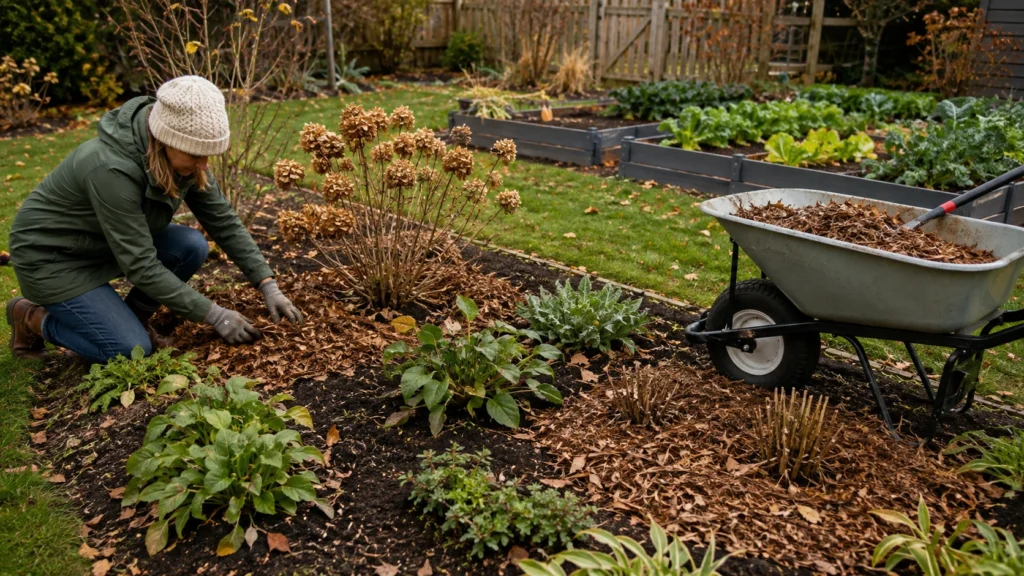
For gardeners learning how to winterize raised garden beds, applying winter mulch is one of the simplest ways to protect exposed root zones. A 2 to 4 inch layer — shredded leaves, straw, wood chips, or compost — insulates the root zone, moderates soil temperature swings, retains moisture, and suppresses weeds as it slowly breaks down.
| Mulch Type | Best For | Notes |
| Straw | Vegetable beds, delicate plants | Lightweight, easy to apply and remove |
| Shredded leaves | General garden beds | Free, adds organic matter as it breaks down |
| Wood chips | Trees, shrubs, perennial borders | Long-lasting, steady insulation |
| Compost | Any bed needing a nutrient boost | Feeds soil while insulating |
Keep mulch a few inches clear of stems and trunks — piling it directly against plant tissue traps moisture and invites rot.
3. Protect Plants From Frost
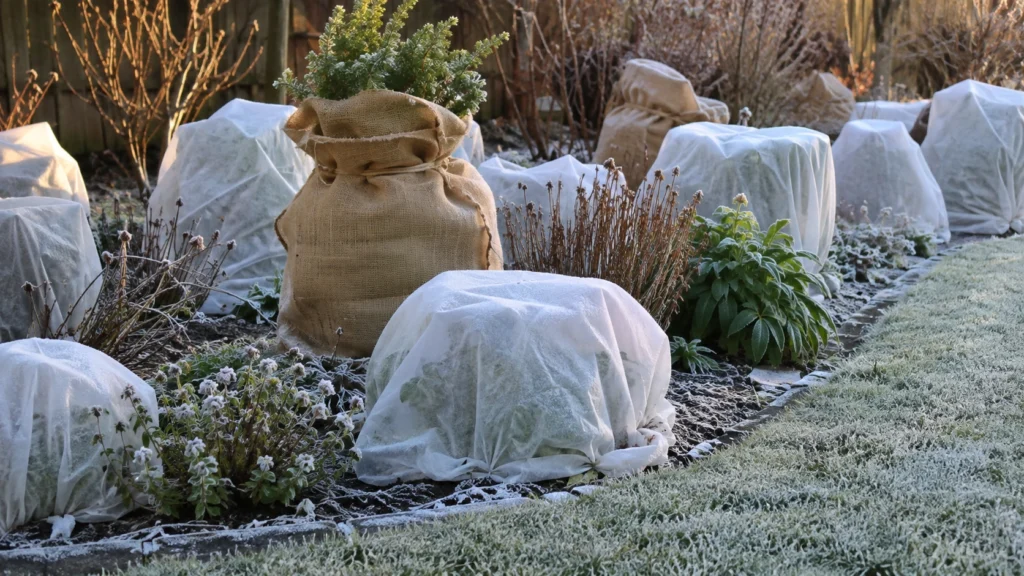
Frost-sensitive plants need direct intervention before the first hard freeze. Breathable frost cloth or garden fabric traps warmth while still allowing airflow, making it ideal for young plants, flowers, and tender vegetables. For shrubs like roses and hydrangeas, a loose burlap wrap — especially on the side facing prevailing winter winds — adds meaningful protection without smothering the plant.
Avoid covering plants with plastic sheeting directly; it traps moisture against foliage and often causes more fungal damage than the frost it was meant to prevent.
4. Prepare Garden Soil for Winter
Fall is an ideal time to prepare garden soil for winter and rebuild soil health before the garden goes dormant. Work compost or well-rotted manure into garden beds so it has months to integrate before spring planting. This also improves soil structure and drainage, which matters especially in beds that see heavy winter rain or snowmelt.
Loose, amended soil allows roots to establish more easily once the growing season restarts, while compacted, untreated soil tends to carry that problem straight into spring.
5. Prune Selectively — Not Everything
Pruning before winter helps some plants and hurts others, so timing and selection matter. Cut back dead, damaged, or diseased branches on deciduous trees and shrubs once they’re dormant, and lightly tidy overgrown perennials for airflow.
This approach is especially useful when preparing a perennial garden for winter, because many perennials benefit from some protection rather than being cut completely to the ground.
Hold off on:
- Spring-flowering shrubs (lilacs and similar) — they’ve already set next season’s buds
- Evergreens — their foliage provides natural winter insulation
- Marginally hardy perennials — old growth helps protect the crown through freezing temperatures
6. Prepare Your Lawn for Winter
Your lawn needs a little fall lawn care before winter too. Give grass a final mow at a slightly shorter height, remove heavy layers of fallen leaves, and aerate compacted areas so water and nutrients can reach the roots.
A fall-formulated fertilizer may also help cool-season grass store nutrients before dormancy. For gardeners comparing lawn feeding options, choosing the right nitrogen fertilizer for lawns can support healthy grass growth before winter dormancy. Avoid cutting grass excessively short, since weak roots can be more vulnerable to winter stress.
7. Winterize Container Plants
Container plants are more exposed to freezing temperatures because their roots have less insulation than plants growing directly in the ground. As part of how to winterize your garden, move frost-sensitive containers to a garage, greenhouse, or sheltered porch before the first hard freeze.
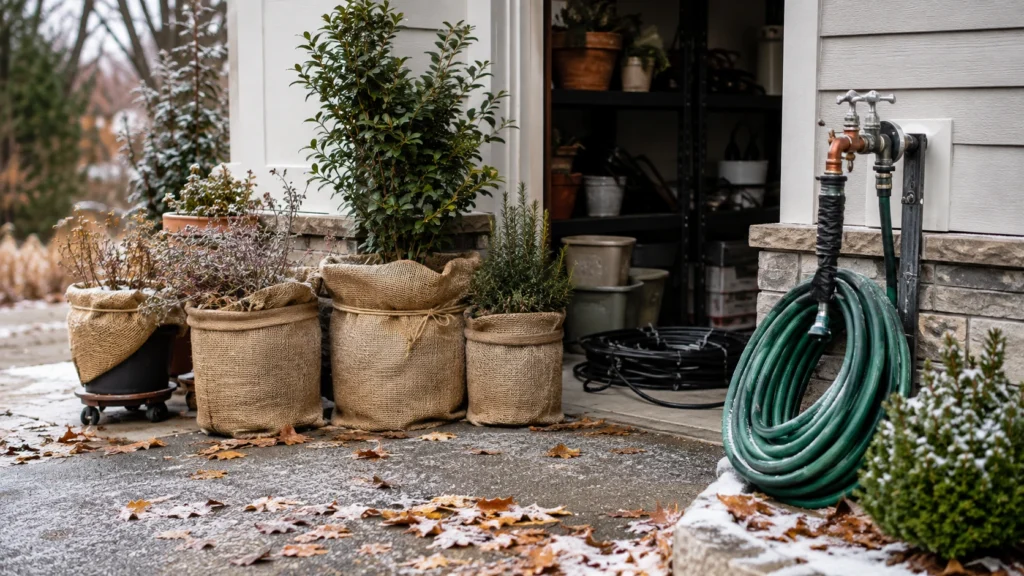
For containers that must remain outdoors, wrap the pots with burlap or another insulating material and place them in a protected location. Reduce watering as plant growth slows, but don’t allow containers to become completely dry. Cold, wet soil can increase the risk of root rot, especially when drainage is poor.
8. Winterize Garden Hoses and Irrigation
Learning how to winterize your garden also means protecting irrigation equipment from freezing temperatures. Disconnect garden hoses, drain them completely, and store them in a dry location.
Shut off and drain drip irrigation lines and outdoor faucets where appropriate. Water left inside hoses or pipes can expand when frozen, causing cracks, split fittings, and unnecessary spring repairs.
9. Clean, Sharpen, and Store Garden Tools
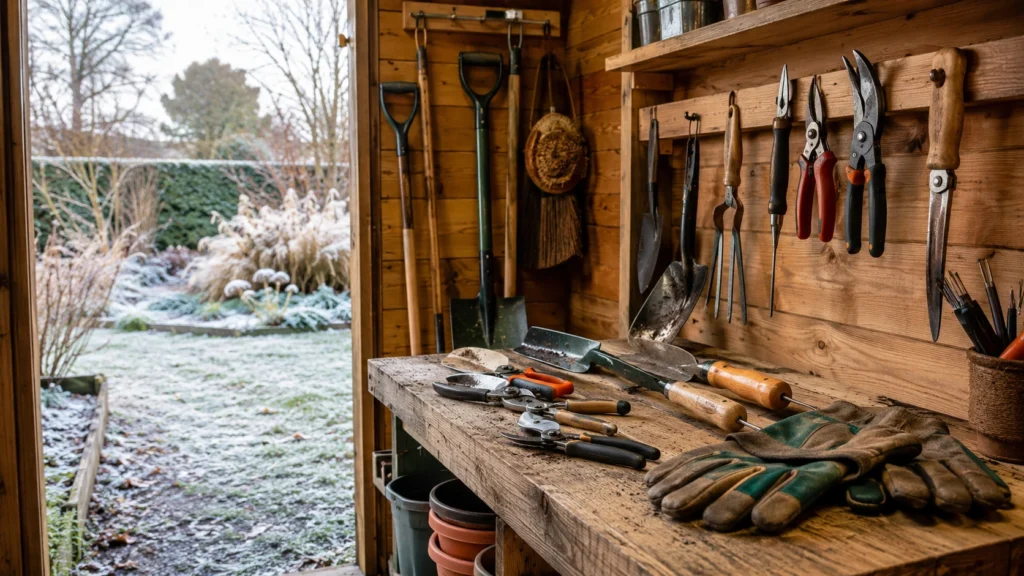
Remove soil, sap, and moisture from pruners, shovels, and shears before storing them for the season — leftover dirt holds moisture and accelerates rust. Sharpen blades while you’re at it, so cutting tools are ready to go the moment spring pruning starts, and store everything in a dry, covered space rather than directly on damp flooring.
10. Monitor Your Garden Through the Cold Months
Winter prep doesn’t end once the first frost passes. Check plant covers periodically — wind and heavy snow can loosen burlap or frost cloth and expose plants that still need protection. Watch soil moisture and avoid overwatering, since cold, slow-draining soil holds water longer than gardeners expect. And keep an eye out for frost stress symptoms like blackened leaves or wilted stems, so you can respond before the damage spreads.
A Practical Example: Preparing a Mixed Perennial Bed
Imagine a mixed perennial bed containing coneflowers, hostas, and a young Japanese maple. A gardener preparing the bed three weeks before the expected first hard frost could remove spent hosta foliage, leave some coneflower seed heads for winter birds, add a 3-inch layer of mulch, protect the maple’s trunk, and drain the drip line.
This example shows what how to winterize your garden looks like in practice: several small tasks completed at the right time to protect roots, plants, soil, and irrigation equipment from winter damage.
Winter-Friendly Plants Worth Adding to Your Garden
Winter doesn’t have to mean an empty garden. Several cold-hardy plants, winter vegetables, and flowers can tolerate cooler conditions and continue growing with the right protection:
- Garlic — planted in fall to establish roots before the ground freezes, ready for harvest the following summer
- Kale — cold actually sweetens its flavor, and mulch extends its productive window
- Pansies — reliably cold-tolerant and one of the few flowers that add color through winter
- Spinach and other hardy greens — many varieties keep producing well into cooler weather
Common Mistakes to Avoid When You Winterize Your Garden
| Mistake | Why It’s a Problem |
| Mulching too early | Soil is still warm, which can attract pests and delay natural dormancy |
| Overwatering in cold weather | Slower evaporation plus excess moisture leads to root rot |
| Heavy, indiscriminate pruning | Removes insulation and next season’s flower buds on some species |
| Covering plants with plastic directly | Traps moisture, encourages fungal problems |
| Leaving irrigation lines full of water | The most common cause of spring hose and pipe repairs |
| Storing tools dirty | Trapped moisture speeds up rust and can spread plant disease |
Winter Garden Preparation Timeline
| Time | Task |
| Early Fall | Clean beds, remove diseased plants, pull weeds, clear debris |
| Mid Fall | Amend soil with compost, finish selective pruning, clean tools |
| Late Fall | Apply 2–4 inches of mulch, prepare containers for cold |
| Before First Frost | Move sensitive potted plants indoors, prepare covers |
| First Frost | Cover vulnerable plants, secure containers and covers |
| Through Winter | Monitor frost stress, check covers, avoid overwatering |
Conclusion
Knowing how to winterize your garden isn’t about one dramatic task — it’s a sequence of small, well-timed steps: cleaning up, mulching, protecting sensitive plants, amending soil, and putting tools and irrigation equipment safely away before the ground freezes solid. Spend a couple of afternoons on it each fall, following a simple checklist rather than rushing everything at once, and your garden will come through winter with far less stress — and a stronger start once spring arrives.
Frequently Asked Questions
What month should I winterize my garden?
Start 2–4 weeks before your area’s first hard frost, usually in early to mid-fall.
How do I protect plants from frost?
Use breathable frost cloth or burlap, and move sensitive container plants indoors before freezing temperatures.
Should I cut plants back before winter?
Prune dead, damaged, or diseased growth, but avoid heavy pruning on spring-flowering shrubs and evergreens.
Can mulch really protect plants from freezing?
Yes. Apply 2–4 inches of mulch around root zones, keeping it a few inches away from stems and trunks.
Can I still winterize my garden if I missed the first frost?
Yes. Start as soon as possible, prioritizing irrigation drainage and root-zone mulching to reduce winter damage.