Confused by AeroGarden models? This guide compares all major options from the Sprout to the Farm so you can find the right fit for your space and goals.
Introduction
You’ve seen AeroGardens on kitchen counters, in social media posts, and possibly in a friend’s home – those sleek hydroponic units glowing with grow lights, producing fresh herbs and vegetables indoors year-round. They look great. And from what you’ve heard, they actually work. But then you go to buy one and realise there are somewhere between six and ten different models depending on where you look, with prices ranging from $50 to over $700.
How different can they really be? Pretty different, as it turns out. Pod capacity, light wattage, light height adjustability, control panel features, and physical footprint all vary significantly between models. Getting the wrong one means either outgrowing it in a month or paying for features you’ll never use. This guide cuts through the confusion.
How AeroGarden Systems Work
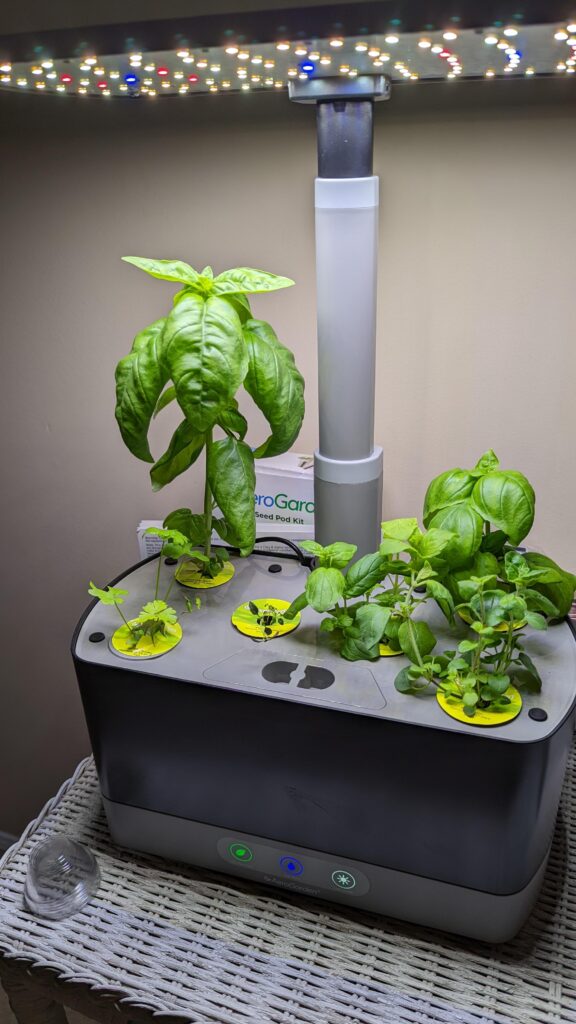
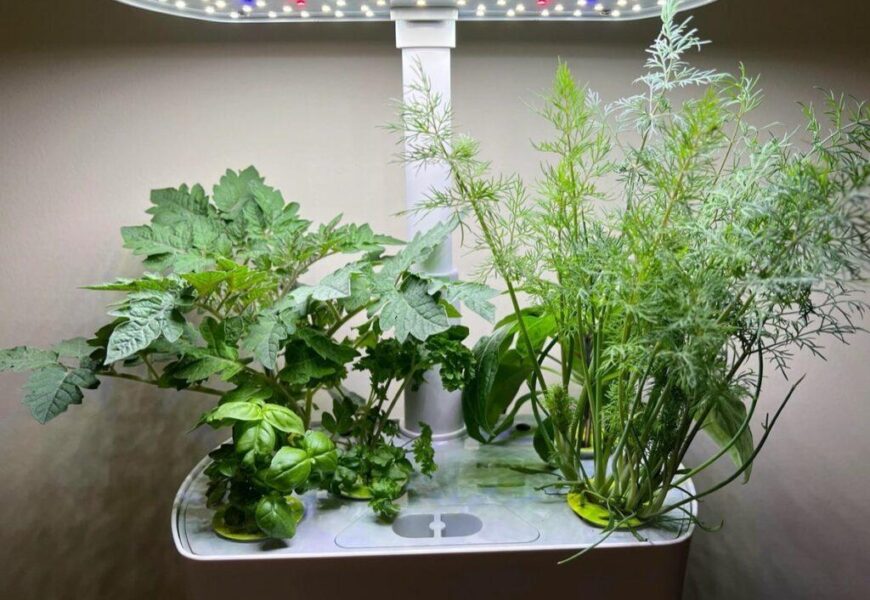
Before comparing models, a quick explanation for the uninitiated. AeroGarden units use hydroponics — plants grown in water-based nutrient solutions rather than soil. Each unit has a base water reservoir, a deck with pre-drilled pod holes, and an overhead light panel on an adjustable arm.
You insert “seed pods” (small plastic pod containers with seed and growing medium) into the holes, fill the reservoir with water, add liquid nutrients, and turn it on. The system runs on a timer that automatically controls light cycles. Roots grow down into the nutrient-rich water. Plants grow up toward the grow lights.
The result is faster-than-soil growth (often 30–50% faster according to the manufacturer) and the ability to grow fresh produce at any time of year, regardless of outdoor conditions. Most units come with a seed kit pre-selected for the model size.
The Main AeroGarden Product Lines
AeroGarden currently offers several distinct product lines. Understanding these lines first makes individual model comparisons clearer.
Sprout: Entry-level, 3-pod capacity. The smallest and most affordable option. Suited for single households or anyone wanting to try the technology without a significant investment.
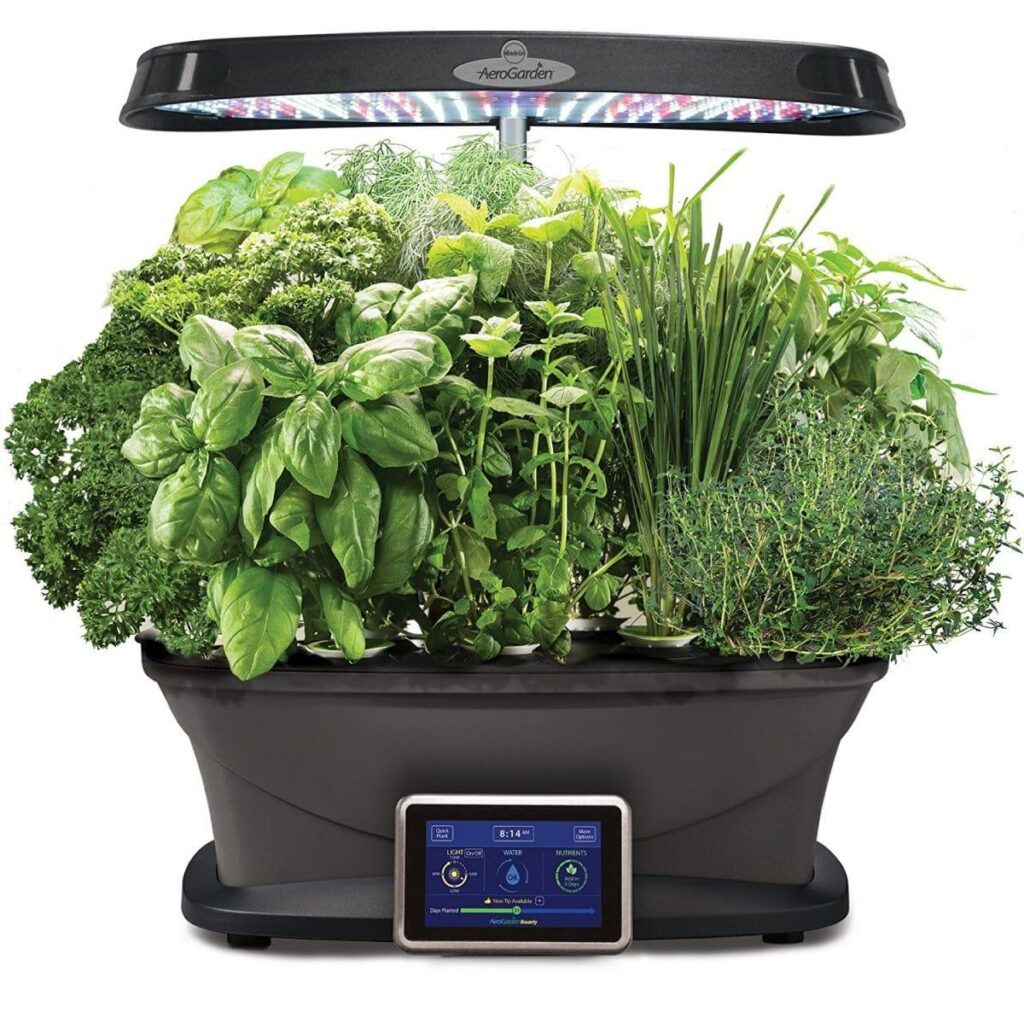
Harvest: Mid-range, 6-pod capacity. The most popular line and the one most people encounter first. Multiple sub-models (Harvest, Harvest Elite, Harvest Slim, Harvest 360).
Bounty: Upper-mid range, 9-pod capacity. More light power, a taller arm, and a control panel upgrade over the harvest line.
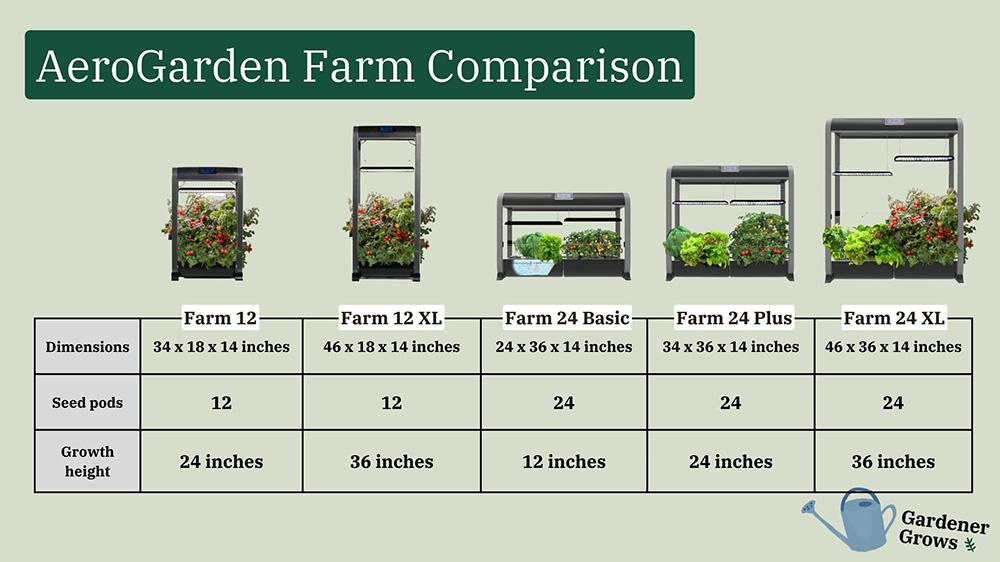
Farm: Large-capacity, commercial-adjacent. Available in 12-pod and 24-pod configurations (Farm 12 and Farm XL/Farm 24). These are serious units for dedicated growing spaces.
Sprout 2-in-1 / Stem: Smaller speciality models that appear and disappear from the lineup based on season and availability.
Comparing AeroGarden Models: The Key Specs
| Model | Pod Capacity | Light Wattage | Max Plant Height | Control Type | Approx. Price |
|---|---|---|---|---|---|
| Sprout | 3 | 10W | 12 inches | Button | $50–$80 |
| Harvest | 6 | 20W | 12 inches | Button | $80–$120 |
| Harvest Elite | 6 | 20W | 12 inches | Touch panel | $100–$150 |
| Harvest Slim | 6 | 20W | 12 inches | Button | $80–$120 |
| Harvest 360 | 6 | 20W | 12 inches | Button | $80–$120 |
| Bounty | 9 | 30W | 24 inches | Touch panel | $150–$200 |
| Bounty Elite | 9 | 30W | 24 inches | Touch panel | $180–$250 |
| Farm 12 | 12 | 45W | 24 inches | WiFi/App | $250–$350 |
| Farm XL (24 pod) | 24 | 60W | 24 inches | WiFi/App | $450–$700 |
Prices fluctuate with sales, refurbished availability, and bundles. The ranges above reflect typical retail pricing as of the most recent product generation.
7 Key Differences Between AeroGarden Models
1. Pod Capacity: The Biggest Starting Decision
Pod count determines how much you can grow simultaneously and largely dictates which plants are practical in each unit.
A 3-pod FarmA Sprout is suitable for a few herbs – basil, mint, and parsley – used by one or two people. At 6 pods (Harvest line), you have enough space for a full herb variety pack or a small salad green setup. At 9 pods (Bounty), you can grow enough salad greens to contribute meaningfully to a household’s diet, along with herbs. The farm models at 12 and 24 pods are capable of serious food production.
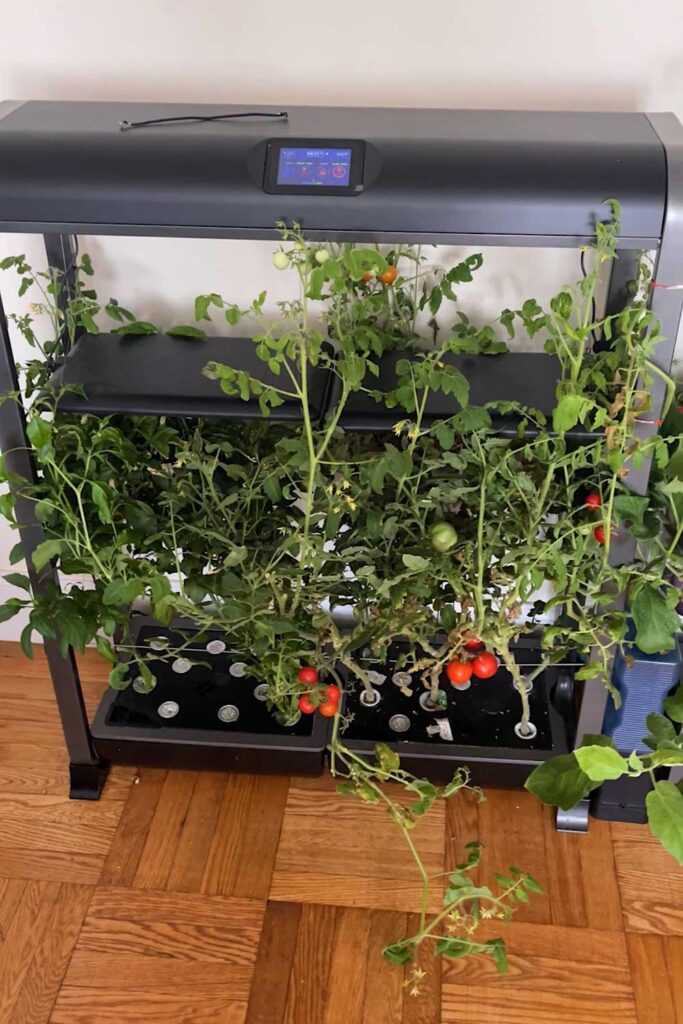
One practical consideration: growing large plants like tomatoes or peppers in an AeroGarden is possible (many people do it), but they consume 2 to 3 pods’ worth of space as their roots spread. A 6-pod Harvest can realistically grow 1 to 2 tomato plants, while a Farm 12 can grow 4 to 6.
2. Light Wattage and Height: What Actually Grows Well
counts does. The grow light is what limits which plants you can grow in each model, more than the pod count does. Higher wattage lights provide more photosynthetically active radiation (PAR) — the wavelengths plants actually use for growth.
The Sprout and Harvest units at 10–20W are excellent for herbs and leafy greens, which are relatively low-light crops. Fruiting crops like tomatoes, peppers, and cucumbers need more light to produce well. The Bounty and Farm models with 30W+ are the practical minimum for growing tomatoes and peppers to fruition.
Indeterminate tomato maximum plant height matters too. The 12-inch arm height on Harvest models limits you to compact plants unless you’re willing to harvest aggressively to keep plants short. The 24-inch arm on Bounty and Farm models accommodates full-size indeterminate tomato varieties, though training and pruning are still necessary.
3. Control Panel: Buttons vs. Touch vs. WiFi App
This is largely a convenience distinction, but it affects the day-to-day experience noticeably.
Button controls (Sprout, Harvest basic) are simple but require manual programming adjustments. Most users set the light schedule once and leave it, so the simplicity rarely becomes a limitation.
Bounty and touch panels (Harvest Elite, Bounty, and Bounty Elite) look sleeker and provide clearer feedback, with the same programmatic capability in a more intuitive interface.
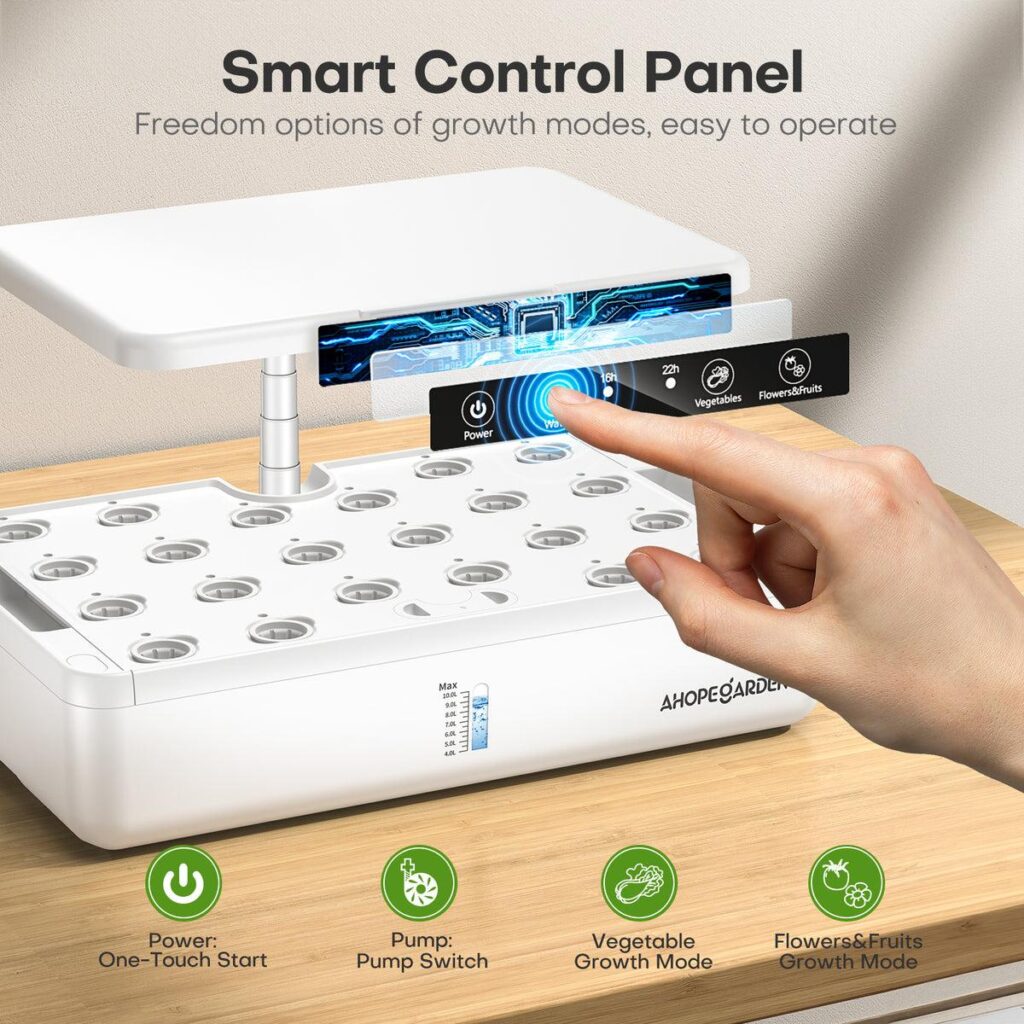
WiFi and app control (Farm 12 and Farm XL) let you monitor and adjust your garden remotely, receive alerts when nutrients or water need replenishment, and track your garden’s history. For large units or multiple units running simultaneously, app control is genuinely useful. For a single countertop unit, it’s a nice-to-have.
4. Harvest Slim vs. Standard Harvest: The Footprint Difference
The Harvest Slim is designed for narrow or confined spaces — deep windowsills, small kitchen counters, or spaces where the standard Harvest’s footprint (roughly 10.5 × 6 inches) is too wide. The Slim has the same 6-pod capacity and 20W light but in a narrower profile.
If counter space is genuinely limited, the Slim is worth the consideration. Otherwise, the standard Harvest’s slightly wider layout gives plants a bit more room.
5. The Harvest 360: A Different Shape Entirely
The Harvest 360 has a round pod arrangement (rather than the typical linear or rectangular layout), and the light arm rises from the centre rather than from one end. This creates a more compact footprint for its 6-pod capacity and fits nicely in corners or centrally on a table.
The circular design looks more like a decorative item than the rectangular models, which some buyers specifically want. The tradeoff is that the central light arm means the arm can’t be positioned to the side, so it’s always directly above the centre of the pod arrangement.
6. AeroGarden Farm 12 vs. Farm XL: When Size Matters
The Farm 12 is a 24-pod unit in landscape orientation — two rows of pods on a table or shelf unit. The Farm XL (sometimes called the Farm 24) doubles the capacity with larger dimensions.
Both include app connectivity, but they serve different purposes. The Farm 12 is suitable for a dedicated kitchen herb and salad garden — serious production but manageable in a dining area or kitchen corner. The Farm XL is a genuine growing setup for people who want to supply a significant portion of their produce from indoor growing. At that scale, it typically needs its own dedicated space — a utility room, spare room, or garage corner.
7. Refurbished and Previous-Generation Models
AeroGarden has sold through several product generations, and certified refurbished units are often available at 20–40% off retail through the company’s own website and through Amazon. Previous-generation models (like the older Harvest and Bounty units) perform identically to current versions for the vast majority of users.
—If budget is a primary concern, a certified refurbished Bounty often represents better value than a new Harvest Elite — you get 9 pods, higher light power, and the touch panel at a similar or lower price.
Which AeroGarden Model Is Right for You?
The answer depends on three things: what you want to grow, how much counter or floor space you have, and your budget.
For herbs and occasional salad greens, one or two people: AeroGarden Harvest or Harvest Elite. It’s the sweet spot of price, capability, and size.
For a small family that wants to actually use their garden for meals: AeroGarden Bounty. The 9-pod capacity, taller arm, and higher light wattage open up your options significantly.
For tomatoes, peppers, or larger fruiting crops: AeroGarden Bounty (minimum) or Farm 12. The Harvest models can grow small-fruited tomato varieties, but they’ll be limited.
For serious indoor growing or replacing grocery store greens: AeroGarden Farm XL or Farm 12. These units are overkill for casual use but transformative for committed indoor gardeners.
For a gift or first-time user on a tight budget: AeroGarden Sprout. It’s limited, but it introduces the technology without a major financial commitment and grows three healthy herb plants reliably.
What Can You Actually Grow in an AeroGarden?
The flavour herbs are the AeroGarden’s strongest category. Basil, mint, parsley, cilantro, chives, dill, and thyme all perform exceptionally well in any model. The growth rate compared to outdoor or windowsill herbs is noticeably faster, and the flavour is excellent.
Arugula and salad greens (lettuce varieties, spinach, arugula, and kale) work very well in any model with 6 or more pods. They’re fast-maturing and can be harvested continuously by cutting rather than pulling whole plants.
Cherry tomatoes and small peppers (like Lunchbox or Shishito types) are achievable in Bounty and Farm units with consistent training, pruning, and hand-pollination assistance (a soft brush or gentle shaking to transfer pollen since there are no pollinators indoors).
Large tomatoes, full-size peppers, squash, and similar crops are not practical in any AeroGarden model — the size and root volume requirements exceed what these systems accommodate.
Conclusion
https://housenovahub.com/AeroGarden models differ enough that choosing wrong is a real possibility — and most commonly, people either buy too small and outgrow their unit quickly, or overspend on Farm-level capacity they don’t need.
For most people starting out, the Bounty is the best single model to buy—it has enough capacity and light power to grow a meaningful variety of plants; the touch panel control is genuinely pleasant to use; and it sits comfortably on a kitchen counter. The Harvest is the right choice if budget is the primary constraint. The farm models are for people who know they want serious production.
Whatever you choose, the experience of picking fresh herbs in January or watching tomatoes ripen indoors in February is genuinely satisfying. That part doesn’t change no matter which model you start with.
FAQs
What is the most popular AeroGarden model?
The AeroGarden Harvest line consistently ranks as the best-selling, thanks to its balance of price and capability. The Bounty is the upgrade most frequent Harvest users eventually make.
Can you grow vegetables other than herbs in an AeroGarden?
Yes. Lettuce, spinach, cherry tomatoes, small peppers, and even dwarf beans are possible. Results with fruiting crops depend heavily on which model you use and how well you manage the plant.
How much does an AeroGarden cost to run?
HarvestLight electricity costs are modest — the harvest runs about $0.02–0.04 per day. The ongoing cost is primarily the liquid nutrients (around $10–15 per bottle, lasting several months) and replacement seed pods ($20–40 for a 6-pod kit).
Do AeroGarden plants taste as good as soil-grown?
Most users report that herbs grown in AeroGarden systems taste equal to or better than store-bought and are comparable to good soil-grown garden herbs. Tomatoes and peppers depend more heavily on light levels and the specific variety.
How long do AeroGarden lights last?
The LED grow lights in current models are rated for 6,000+ hours. Running 16 hours per day, that’s over a year before light output degrades significantly.