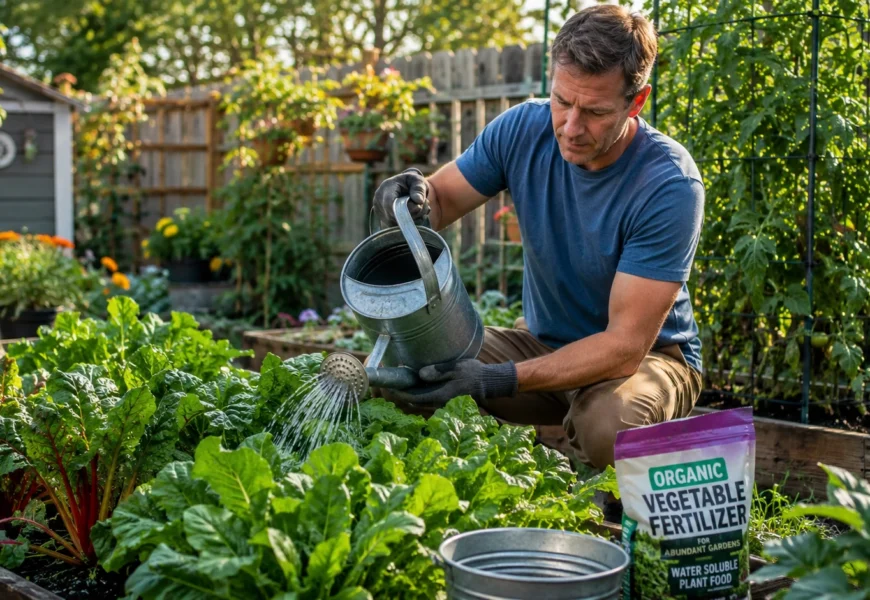
Soluble fertilizer dissolves fast and feeds plants instantly. Learn how it works, when to use it, and how it compares to granular and organic options.
Introduction
There’s a moment every gardener experiences eventually: a plant that’s clearly struggling, leaves turning pale, growth stalling, and you needing a fix that works now — not in three weeks. Granular fertilizers sitting in soil take time to break down. That’s where soluble fertilizer earns its place. Dissolved in water and absorbed almost immediately, it’s the fastest, most direct way to get nutrients into a struggling or actively growing plant.
But “fast” doesn’t always mean “best for every situation”, and soluble fertilizers come with their own set of rules, risks, and ideal use cases. This guide explains exactly how soluble fertilizer works, when it shines, when it falls short, and how to use it correctly across different types of plants and gardens.
What Is Soluble Fertilizer, Exactly?
Soluble fertilizer refers to any fertilizer formulated to dissolve completely in water, creating a nutrient solution that plants absorb through their roots (and sometimes their leaves, when applied as a foliar spray). It comes in two primary forms: water-soluble powders or crystals (like Miracle-Gro, Jack’s Classic, or MaxSea) that you mix with water before applying, and ready-to-use liquid concentrates that are already in solution and just need dilution.
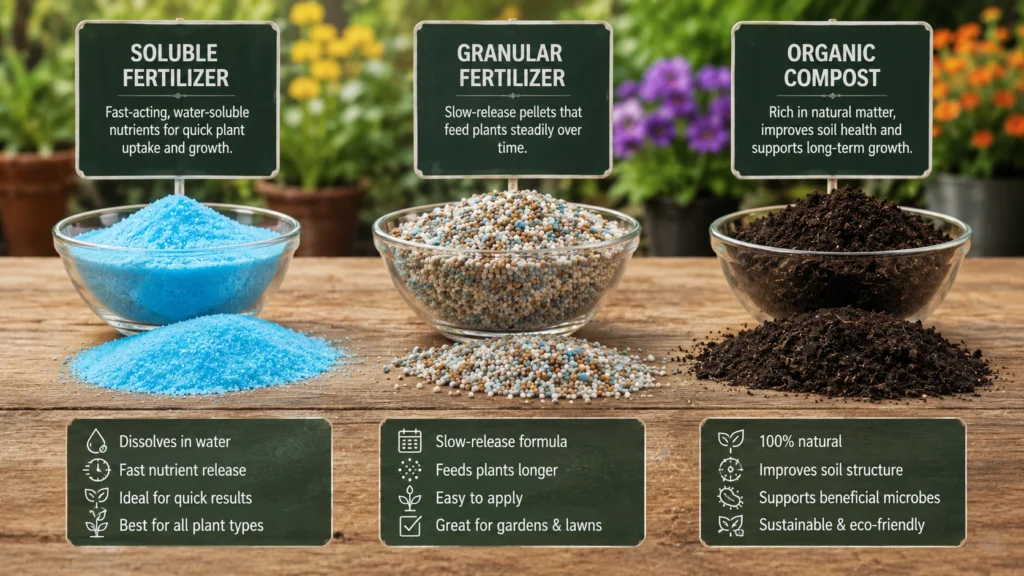
The defining characteristic is speed of nutrient availability. Because the nutrients are already dissolved rather than locked in solid granules waiting to break down, plant roots can begin absorbing them almost immediately after application. This contrasts sharply with granular and slow-release fertilizers, which depend on moisture, soil microbial activity, and time to gradually release nutrients.
How Soluble Fertilizer Actually Works in the Soil
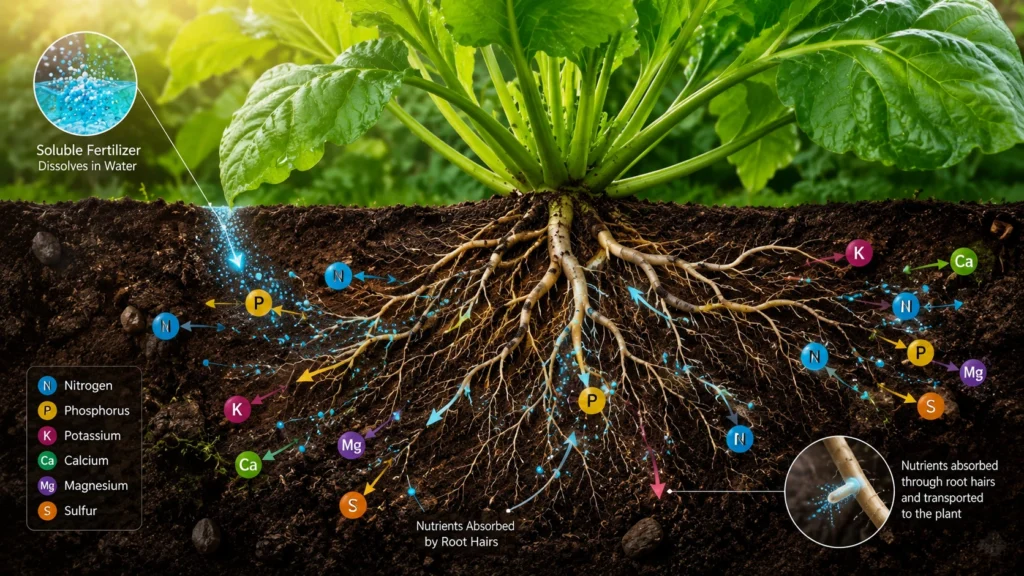
When you apply a soluble fertilizer as a soil drench, the dissolved nutrient ions move with water through the soil profile and come into direct contact with root hairs, the primary nutrient-absorbing structures on plant roots. Because the nutrients are already in ionic form (rather than needing to be broken down from organic compounds or dissolved from mineral granules), absorption happens essentially as fast as the roots can take it up.
This is genuinely different from how granular fertilizers work. A granule of slow-release fertilizer needs moisture to begin dissolving, soil temperature warm enough to support microbial activity (for organic and some coated products), and time — often weeks — before its nutrients become fully available. Soluble fertilizer skips that entire waiting period.
The trade-off is equally real: because the nutrients are immediately available, they’re also immediately vulnerable to leaching. Heavy rain or excessive irrigation after application can wash dissolved nutrients down past the root zone before plants absorb them, essentially wasting the application.
When Soluble Fertilizer Is the Right Choice
Correcting Visible Nutrient Deficiencies Quickly
If a plant shows clear signs of deficiency — yellowing leaves, stunted growth, poor colour — soluble fertilizer delivers the fastest possible correction. Within days, often within a week, you’ll see improvement that a granular application would take much longer to produce.
Container Gardening and Houseplants
Container-grown plants have a limited volume of soil to draw nutrients from, and that soil depletes faster than garden soil due to more frequent watering, which leaches nutrients out through drainage holes. Regular soluble fertilizer applications (every 1 to 2 weeks during active growth) compensate for this constant nutrient loss far more effectively than occasional granular feeding.
Seedlings and Young Transplants
Young plants benefit from gentle, frequent, diluted feeding rather than a single concentrated dose. Soluble fertilizer applied at quarter- to half-strength gives seedlings consistent access to nutrients without the burn risk that a granular application near tender young roots can create.
Foliar Feeding for Rapid Uptake
Certain nutrients, particularly micronutrients like iron, magnesium, and zinc, can be absorbed directly through leaf surfaces when sprayed as a diluted soluble fertilizer solution. This foliar feeding approach is the fastest possible method for correcting an acute micronutrient deficiency, since it bypasses the soil and root uptake process entirely.
Hydroponic and Aeroponic Growing
Soluble fertilizer isn’t optional in hydroponic systems — it’s the only practical option, since there’s no soil to hold slow-release nutrients. Specially formulated hydroponic nutrient solutions are a subcategory of soluble fertilizer engineered for precise, balanced nutrition in water-based growing systems.
When Soluble Fertilizer Falls Short
Long-Term Garden Bed Feeding
For an in-ground vegetable garden or perennial bed, relying exclusively on soluble fertilizer means frequent reapplication — often weekly — to maintain adequate nutrition, since the nutrients leach out relatively quickly. A combination approach (granular or organic base fertilizer with soluble fertilizer as a supplement) is usually more practical and cost-effective for these settings.
Soil Health Building
Soluble fertilizers feed plants directly but do little to build soil biology or structure. They lack the organic matter that compost, well-rotted manure, and organic granular fertilizers contribute. A garden relying solely on soluble fertilizer over many years may show declining soil structure even while plants receive adequate nutrition season to season.
Environmental Runoff Concerns
Because soluble fertilizers are immediately water-soluble, they’re also immediately prone to runoff if applied before heavy rain or with excessive irrigation. This makes them a higher environmental risk in areas near waterways compared to slow-release alternatives, which release more gradually and are less likely to wash away in a single rain event.
Comparing Soluble, Granular, and Organic Fertilizers
| Factor | Soluble Fertilizer | Granular Fertilizer | Organic Fertilizer |
|---|---|---|---|
| Speed of action | Immediate (1–3 days) | Slow (1–4 weeks) | Slow (2–8 weeks) |
| Application frequency | Frequent (weekly-biweekly) | Infrequent (monthly+) | Infrequent (seasonal) |
| Burn risk | Moderate if over-concentrated | Moderate to high if surface-applied | Low |
| Soil health benefit | Minimal | Minimal (synthetic) / moderate (organic granular) | High |
| Leaching/runoff risk | High | Low to moderate | Low |
| Best for | Containers, deficiency correction, hydroponics | General garden maintenance | Long-term soil building |
| Cost per application | Low-moderate | Low | Moderate-high |
Common Types of Soluble Fertilizer
Balanced All-Purpose Formulas
Products like Miracle-Gro All Purpose (24-8-16) or Jack’s Classic All Purpose (20-20-20) provide roughly balanced NPK ratios suitable for general feeding across a wide range of plants. These are the most common entry points for home gardeners using soluble fertilizer for the first time.
Bloom-Boosting Formulas
Higher phosphorus and potassium soluble fertilizers (like 10-30-20 or similar ratios) are marketed for flowering and fruiting plants. They’re typically applied once plants reach the flowering stage, supplementing or replacing a balanced formula during that growth phase.
Specialty Formulas
Many soluble fertilizers are formulated for specific plant categories: orchid formulas with lower overall NPK and specific micronutrient ratios, tomato-specific formulas with calcium added, and acid-loving plant formulas (for azaleas, blueberries, and similar species) with added sulfur or different micronutrient ratios to support acidic soil preferences.
Organic-Derived Soluble Fertilizers
Fish emulsion and liquid kelp extract are technically soluble (or at least readily dispersible) fertilizers derived from organic sources. They combine the rapid availability of soluble fertilizer with the additional micronutrient and biological benefits associated with organic inputs, though they typically have lower overall NPK concentrations than synthetic soluble products.
How to Apply Soluble Fertilizer Correctly
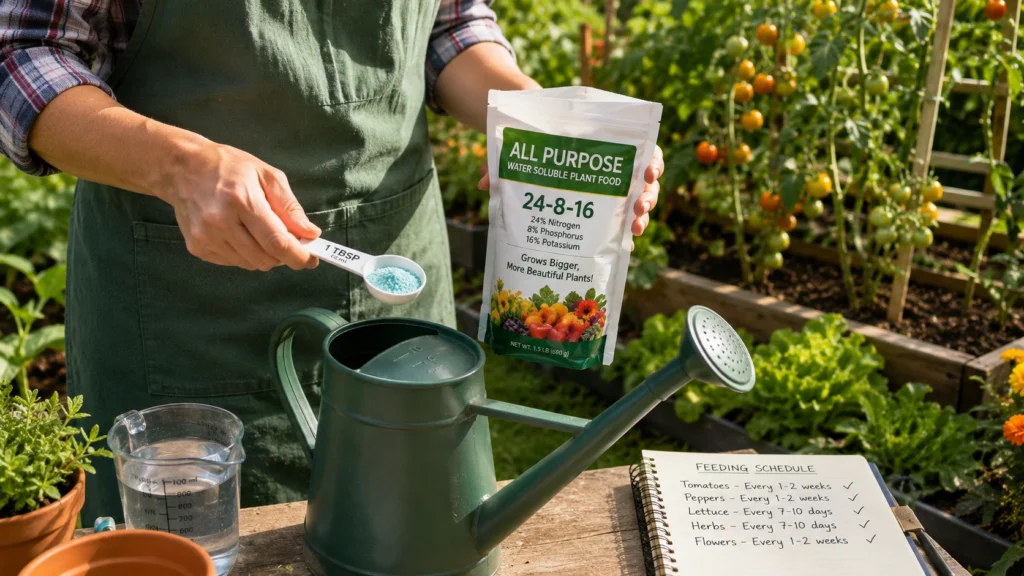
Always dilute according to label instructions — soluble fertilizers are concentrated, and applying them at full label strength too frequently is one of the most common causes of fertilizer burn in container plants and seedlings.
For houseplants and containers, a common, gentle approach is feeding at half the recommended label strength every other watering, rather than full strength at the recommended interval. This “weakly, weekly” approach (a phrase commonly used in gardening communities) tends to produce steadier growth with less risk of nutrient buildup or burn.
For garden vegetables during peak growing season, follow label directions for application frequency, typically every 1 to 2 weeks. Always water plants normally between soluble fertilizer applications — don’t substitute fertilizer solution entirely for regular watering, as this concentrates salts in the soil over time.
Apply in the morning or evening rather than during intense midday heat, when rapid water uptake combined with concentrated nutrients increases stress on the plant.
A Practical Example: Reviving a Struggling Houseplant
A home gardener noticed their fiddle leaf fig had stopped producing new leaves and the existing foliage had turned a dull, pale green over several weeks. A soil check showed the plant hadn’t been fertilized in over six months — common for houseplants, which are easy to forget once the initial excitement of a new plant settles into routine care.
Switching to a balanced soluble fertilizer at half strength, applied every two weeks, produced visible improvement within roughly three weeks: new leaf growth resumed, and existing leaves regained a deeper, healthier green color. A granular slow-release alternative would likely have taken twice as long to produce comparable visible results, illustrating exactly why soluble fertilizer is often the right tool for correcting an existing deficiency rather than preventing one in the first place.
Signs You’re Over-Applying Soluble Fertilizer
Watch for these warning signs that indicate you’re feeding too frequently or at too high a concentration:
- A white, crusty buildup on the soil surface or around drainage holes (salt buildup from fertilizer residue)
- Brown, crispy leaf tips or edges, especially on sensitive plants
- Wilting despite adequate soil moisture (a sign of root damage from concentrated salts)
- Stunted growth following an initial growth spurt (a sign of nutrient burn affecting root function)
If you notice these signs, flush the soil thoroughly with plain water (several times the pot’s volume for containers) to leach out excess salts, and reduce both concentration and frequency going forward.
Conclusion
Soluble fertilizer earns its place in any well-stocked gardening toolkit because of one defining trait: speed. When a plant needs help now, when containers need frequent feeding to compensate for nutrient loss through drainage, or when seedlings need gentle, consistent nutrition, soluble fertilizer delivers results that granular and organic alternatives simply can’t match on the same timeline.
Use it strategically rather than exclusively. Pair it with granular or organic fertilizers for long-term garden bed maintenance, reserve it for containers, houseplants, and acute deficiency correction, and always dilute conservatively rather than aggressively. Done that way, soluble fertilizer becomes the precise, responsive tool it’s meant to be — not a substitute for sound, balanced overall plant nutrition.
FAQs
How often should soluble fertilizer be applied?
For houseplants and containers, every 1 to 2 weeks during active growth, often at half strength. For garden vegetables, every 1 to 2 weeks following label instructions during the growing season.
Is soluble fertilizer better than granular?
Neither is universally better — they serve different purposes. Soluble fertilizer acts faster and suits containers and deficiency correction. Granular fertilizer lasts longer and suits general garden maintenance with less frequent application.
Can soluble fertilizer be used on all plants?
Most plants respond well to soluble fertilizer, but always check concentration recommendations for sensitive plants (orchids, succulents, and seedlings often need significantly diluted strength compared to standard label rates).
Does soluble fertilizer expire?
Dry powder soluble fertilizers stored in a cool, dry place have a long shelf life, often several years. Pre-mixed liquid concentrates should be checked against any expiration date, as nutrient stability can degrade over time, particularly in products containing organic components.