
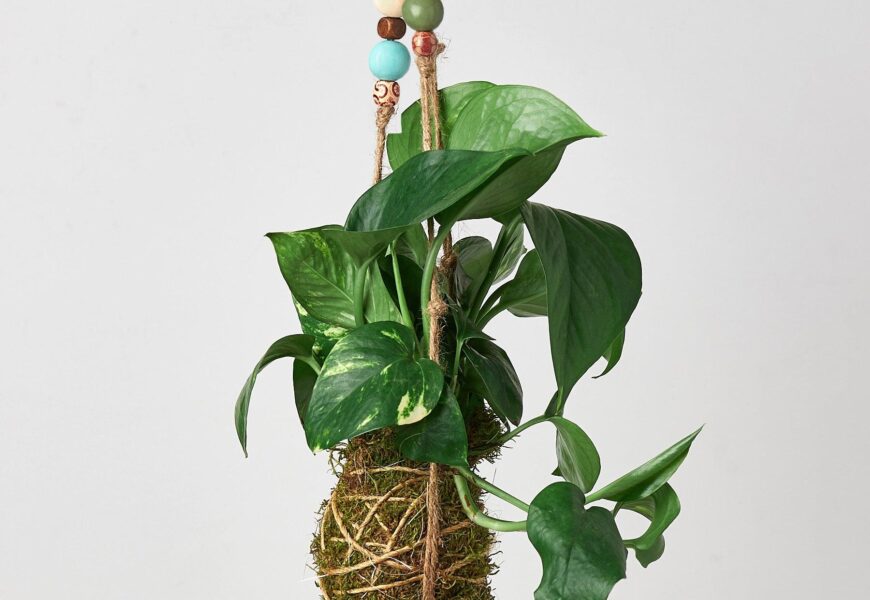
Best plants for kokedama range from ferns to pothos to orchids. Learn which ones thrive in moss balls and how to care for them long-term.
Introduction
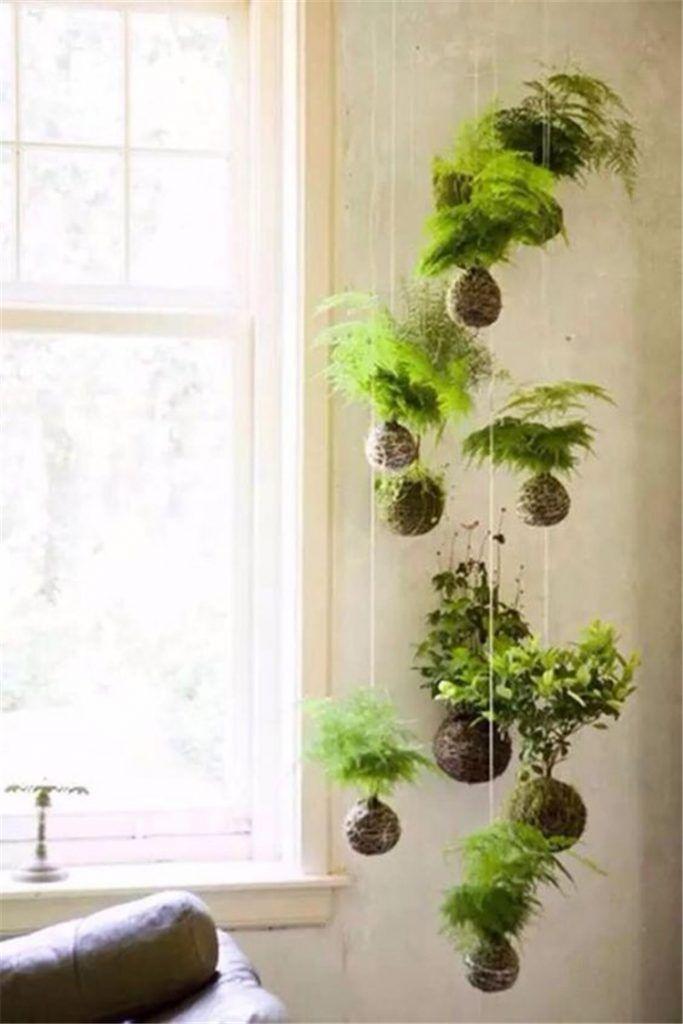
There’s something about a kokedama that stops people in their tracks. A plant suspended in mid-air, roots wrapped in a perfect sphere of dark green moss — it looks like something from a Japanese forest brought indoors. And the best part? You made it yourself. But picking up any plant from the garden centre and wrapping its roots in moss is a recipe for disappointment. Some plants were practically born for kokedama. Others will look great for two weeks before declining.
The plant you choose makes or breaks the whole thing. This guide covers the 11 best plants for kokedama, what makes each one work, how to care for them in moss ball form, and which plants to avoid completely.
What Makes a Plant Suitable for Kokedama?
Not every plant belongs in a moss ball. A good kokedama plant has a few key characteristics:
Compact or slow-growing root system. Plants with aggressive, fast-spreading roots will push out of the moss ball too quickly, requiring constant rebuilding. Compact varieties with contained root systems are far more manageable.
Tolerance for periodic moisture variation. In kokedama, plants experience wet-dry cycles as the moss ball is soaked and then slowly dries. Plants that need constantly moist soil or that hate ever drying out won’t adapt well.
Low to moderate light requirements. Kokedamas are most commonly displayed indoors, away from bright direct sun that would dry the moss ball too fast. Plants that thrive in indirect or filtered light are natural fits.
Relatively low fertiliser needs. The small amount of soil in a kokedama depletes quickly. Plants that can tolerate lean conditions — or that respond well to diluted liquid feeding — fare much better.
With those criteria in mind, here are the best options.
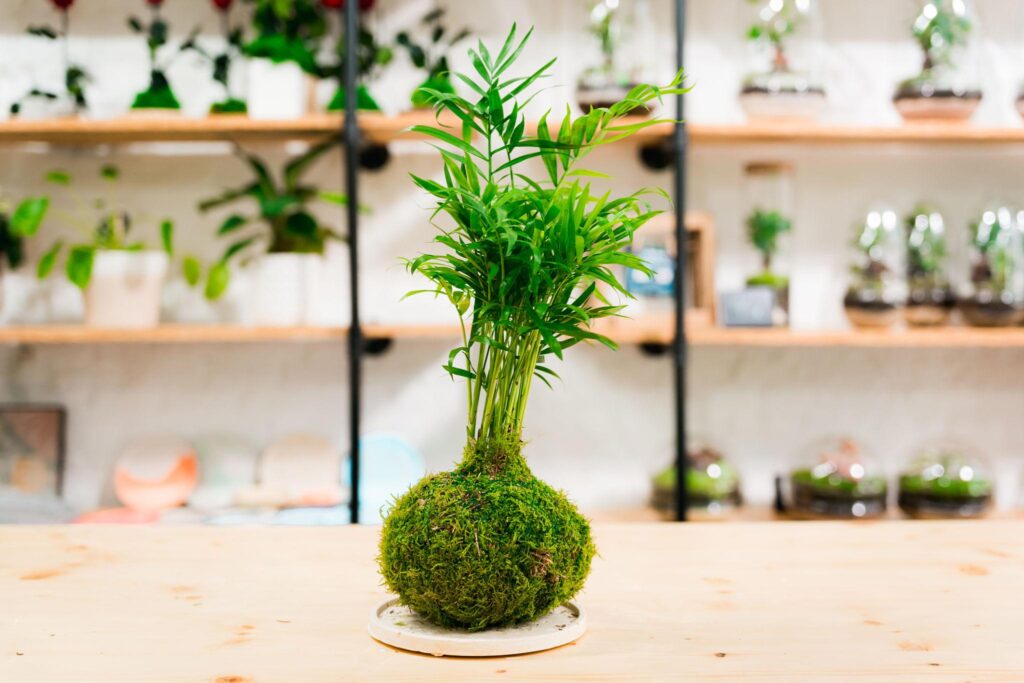
11 Best Plants for Kokedama
1. Boston Fern (Nephrolepis exaltata)
The Boston fern might be the most iconic kokedama plant, and it deserves that status. Its arching, feathery fronds look absolutely stunning hanging from a string or displayed on a surface, and the lush greenery contrasts beautifully with the dark moss exterior.
Boston ferns do need consistent moisture — they’ll tell you quickly when they’re too dry by dropping fronds. But the wet-dry cycle of kokedama care suits them well as long as you soak the ball thoroughly every few days. They prefer humid conditions and indirect light, which makes them ideal for bathrooms or kitchens with north- or east-facing windows.
One consideration: Boston ferns are vigorous growers and will eventually need to be repotted or have their moss ball replaced. Expect to rebuild your kokedama every 12 to 18 months.
2. Pothos (Epipremnum aureum)
If you want a near-indestructible kokedama, pothos is your plant. It tolerates low light, irregular watering, and modest fertilisation without complaint. Its trailing vines look gorgeous hanging from a kokedama suspended in a window, creating a living curtain effect.
Golden pothos, marble queen, and neon pothos are all excellent choices. They grow steadily without the root explosiveness that makes some plants outgrow their moss balls quickly. For beginners, this is probably the safest option — it’s forgiving of mistakes while still producing a beautiful result.
3. Peace Lily (Spathiphyllum)
Peace lilies make dramatic, elegant kokedamas. The glossy dark green leaves and periodically appearing white blooms (spathes) create a sophisticated display that works in living rooms, offices, and hallways.
They tolerate low light well – one of the few flowering plants that does. They do prefer consistent moisture and will droop noticeably when thirsty, which serves as a convenient watering reminder. Peace lily kokedamas work particularly well in larger moss balls that retain moisture longer between soakings.
4. Potted Orchid / Mini Orchid (Phalaenopsis)
Orchid kokedamas are genuinely breathtaking — the elegance of orchid blooms combined with the natural beauty of a moss ball creates something that looks expensive and intricate. The good news: Phalaenopsis orchids are actually quite comfortable in kokedama because they’re epiphytes (plants that naturally grow on surfaces rather than in soil) and tolerate the moisture cycling well.
Use a compact or mini Phalaenopsis for best results. Standard-size orchids can become top-heavy in a moss ball. After blooming, orchids will go through a rest period before producing new flower spikes — the kokedama form doesn’t interfere with this natural cycle.
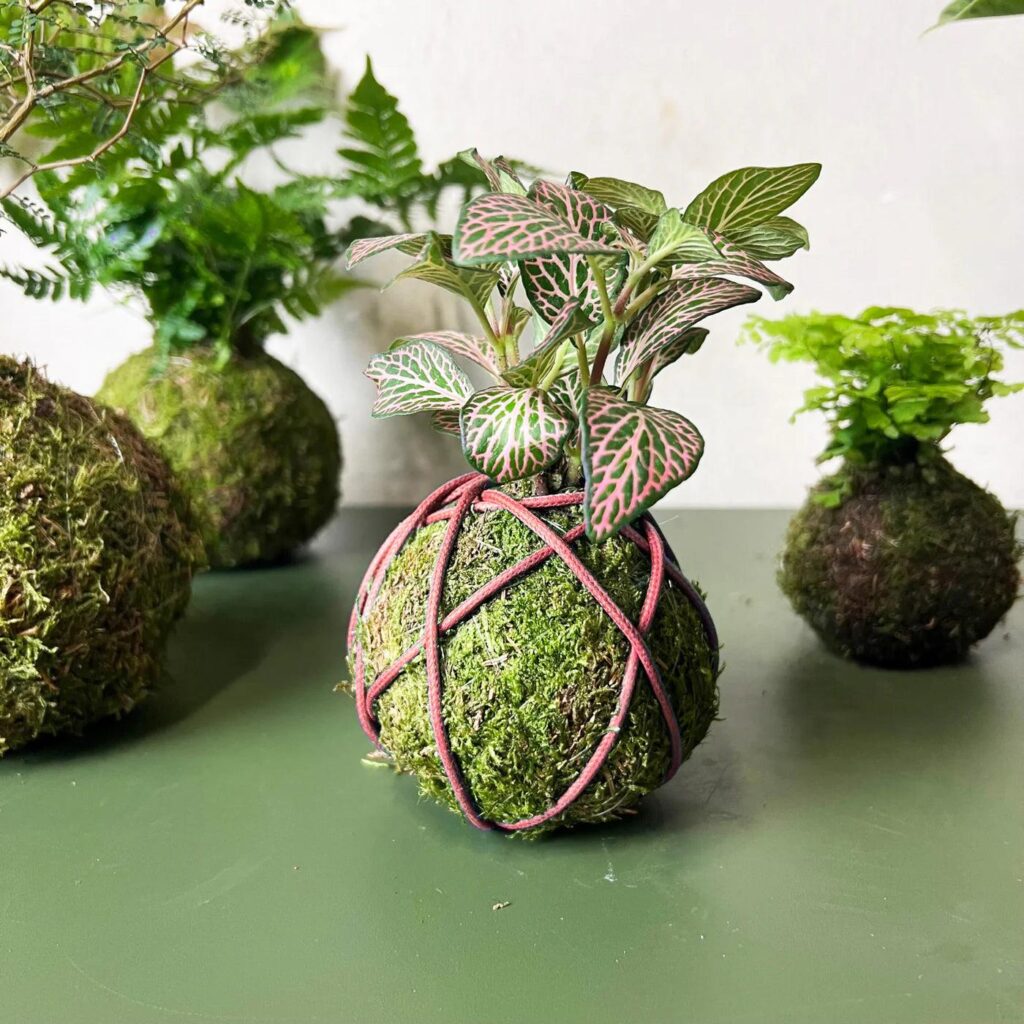
5. Nerve Plant (Fittonia)
Fittonia is a stunning choice for smaller kokedamas. Its compact size and intricately patterned leaves — typically green with white, pink, or red veining — create a jewel-like effect when paired with dark sphagnum moss.
Fittonia needs consistent moisture and high humidity, which means it’s not the best choice for low-humidity homes without a misting routine. But in humid environments or near other plants, it thrives in kokedama form. Its compact root system means the moss ball holds together well for a long time.
6. Baby’s Tears (Soleirolia soleirolii)
Baby’s tears is one of those plants that look almost too pretty to be real — a cascade of tiny, round leaves in bright lime-green, forming a dense, almost velvety carpet. In kokedama form, it creates a spherical cloud of green that drapes beautifully.
It needs consistent moisture and indirect light but is otherwise low-maintenance. Its roots are fine and don’t aggressively push outward, making it easy to work with during the building process. One caution: it’s sensitive to cold drafts and low humidity in winter.
7. Asparagus Fern (Asparagus setaceus or A. densiflorus)
Despite the name, asparagus fern isn’t a true fern but a member of the lily family. Its delicate, feathery texture and arching growth habit make it a beautiful kokedama choice. It’s more drought-tolerant than a Boston fern, making it suitable for those who tend to under-water rather than over-water.
The plumosus variety (with flat, delicate fronds) is particularly elegant in kokedama form. The sprengeri variety is slightly more robust with a flowing, cascading habit. Both work well.
8. Lucky Bamboo (Dracaena sanderiana)
Lucky bamboo is a fascinating choice because it naturally grows in water, making it one of the plants most naturally adapted to the consistently moist conditions inside a kokedama. It’s architectural rather than lush — the upright stalks create a clean, sculptural look that suits modern and minimalist interior styles.
Keep the moss ball evenly moist (not soaking all the time, but never fully dry) and provide bright indirect light. Lucky bamboo grows slowly in moss ball form, which means the kokedama stays manageable for longer.
9. Heartleaf Philodendron (Philodendron hederaceum)
The heartleaf philodendron is a slightly more refined alternative to pothos, with heart-shaped, glossy leaves on trailing or climbing vines. It shares pothos’s forgiving nature but has a slightly more elegant appearance.
Like pothos, it adapts easily to low light and irregular watering cycles. The vines hang beautifully from a suspended kokedama and can be trimmed back easily if they grow too long. A reliable, attractive choice for beginners and experienced kokedama makers alike.
10. Spider Plant (Chlorophytum comosum)
Spider plants are practically made for hanging applications, and kokedama is no exception. The arching strap-like leaves create a fountain effect, and the small “spiderette” plantlets that dangle from long stems add movement and charm.
They tolerate a wide range of light conditions and are one of the more drought-tolerant options on this list. Their root systems are fairly vigorous, so expect to rebuild the moss ball every 12 to 18 months as the plant grows. Solid green and variegated forms both work beautifully.
11. Moss on Its Own (Mood Moss or Sheet Moss)
Sometimes the most beautiful kokedama is one where the moss itself is the plant – no other species involved. A sphere of living mood moss or cushion moss, kept moist and in bright indirect light, creates a meditative, zen-like display. The moss grows slowly and changes texture and colour as it develops.
This approach suits minimalist aesthetics particularly well and requires very little maintenance. It won’t drop leaves, outgrow its shape, or need fertilising.
Kokedama Plant Comparison Chart
| Plant | Light Needs | Water Needs | Difficulty | Best For |
|---|---|---|---|---|
| Boston Fern | Indirect, bright | High | Moderate | Hanging display |
| Pothos | Low to bright indirect | Moderate | Easy | Beginners |
| Peace Lily | Low to indirect | Moderate-high | Easy | Blooming display |
| Mini Orchid | Bright indirect | Moderate | Moderate | Elegant display |
| Nerve Plant | Indirect, medium | High | Moderate | Small displays |
| Baby’s Tears | Bright indirect | High | Easy-moderate | Cascading effect |
| Asparagus Fern | Bright indirect | Moderate | Easy | Textural interest |
| Lucky Bamboo | Bright indirect | High (moist) | Easy | Modern styling |
| Heartleaf Philodendron | Low to indirect | Moderate | Easy | Trailing vines |
| Spider Plant | Wide range | Moderate-low | Easy | Hanging with spiderettes |
| Living Moss Sphere | Bright indirect | High | Easy | Minimalist display |
How to Water Kokedama Plants
Watering is the most important care skill for kokedama. The soak-and-dry method works best for most plants:
Fill a bowl or basin with room-temperature water. Submerge the moss ball for 10–20 minutes or until the ball feels heavy and fully saturated. Lift the ball out, let it drip for a few minutes, then return it to its display location.
How often depends on your environment. In summer or in heated, dry indoor conditions, weekly or even twice-weekly soaking may be needed. In winter or humid rooms, every 10–14 days might be sufficient. The best indicator: squeeze the moss ball gently. If it feels light and the moss looks slightly dry, it’s time to water.
Plants to Avoid for Kokedama
Some plants consistently struggle in moss ball form:
- Cacti and succulents: They need dry conditions and excellent drainage — the opposite of what kokedama provides.
- Large or fast-growing tropical plants: Monstera, Bird of Paradise, and similar plants will outgrow a moss ball within months.
- Plants requiring very specific soil chemistry: Plants needing highly acidic or alkaline soil won’t thrive in the near-neutral environment of a standard kokedama mix.
- Herbs (most varieties): Culinary herbs generally need more nutrients and root space than a kokedama provides.
Conclusion
The plant you choose determines whether your kokedama becomes a living work of art or a constant source of frustration. For beginners, start with pothos, heartleaf philodendron, or spider plant; they’re beautiful and forgiving. For more experienced kokedama makers, mini orchids, nerve plants, and baby’s tears offer stunning results that reward careful attention.
Whatever you choose, the combination of plant, moss, and string creates something that feels genuinely alive in a way that a conventional potted plant rarely does. Start with one, care for it well, and see how quickly you find yourself wanting to make another.
FAQs
What is the easiest plant for kokedama?
Pothos and heartleaf philodendron are the easiest — they tolerate low light, are forgiving with watering, and adapt readily to the moss ball environment.
How long do kokedama plants last?
With proper care, a kokedama can last 1 to 3 years before needing to be rebuilt. The moss ball naturally degrades, and the plant’s root system eventually grows too large for the original ball.
Can kokedama plants be kept outside?
Some can, especially in mild climates. Ferns, asparagus fern, and spider plants handle sheltered outdoor conditions well. Avoid direct sun and rain exposure, which can wash away the moss and soil.
Do I need to fertilise kokedama plants?
Yes, but lightly. Add diluted liquid fertiliser (half-strength) to the soaking water once or twice a month during the growing season. Over-fertilising in kokedama form is easy to do – less is always better.